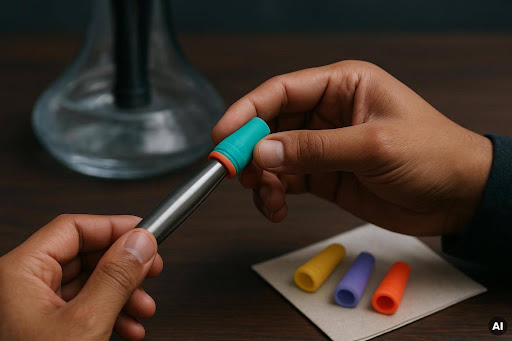
The mouthpiece is a key part of a hookah setup. It is the final point of contact between the smoker and the device, so it affects hand comfort, draw resistance, and cleanliness. Many hookah users spend time choosing the right stem, glass base, and clay bowl, but the mouthpiece decides how each milliliter of cooled smoke feels when it reaches the mouth. Even a well-made waterpipe can feel awkward, too airy, or unclean if its mouthpiece is poorly designed or not cleaned properly.
The mouthpiece also connects modern design with personal comfort. Choosing a well-made hookah mouthpiece can change an ordinary draw into a more comfortable experience. It helps balance the weight of the hose in your hand with the draw resistance of the waterpipe. This small part makes the complete system feel cleaner, more personal, and easier to use.
What Is a Hookah Mouthpiece and How Does It Work?
In modern shisha terms, the mouthpiece is also called a hose handle or wand. It is the stiff or partly flexible piece at the user’s end of the hose. Older hookahs often had fixed wooden handles covered with leather or fabric. Modern hookahs usually use a separate mouthpiece that can be removed, replaced, cleaned, and matched to the rest of the setup.
The mouthpiece works as a passage for smoke. When the smoker inhales, the pressure inside the hookah changes. This pulls smoke through the bowl, stem, water, hose, and finally the mouthpiece. The handle gives the smoker a firm point to hold, making it easier to guide the hose and take steady draws during a long session without bending or pulling the hose too much.
Where the Mouthpiece Fits in a Hookah Setup
A hookah usually includes a bowl, tray, stem, base, and water chamber. The mouthpiece sits at the very end of this system. It connects to the flexible hose, which is often made from food-grade silicone in modern hookahs. Traditional hoses may use reinforced composite materials or other coverings.
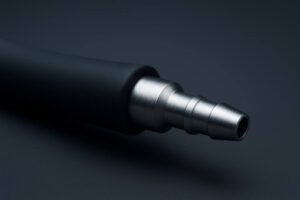
The mouthpiece joins the hose through an insertion barb or a tapered plug that fits by friction. This connection needs to be airtight so the hookah can keep steady negative pressure. Since the mouthpiece is held, moved, and exposed to changes in temperature, its fit and strength affect how stable the hose feels during use.
How Smoke Travels from the Bowl to the Mouthpiece
The smoke journey starts at the top of the hookah. Natural charcoal heats the flavored tobacco in the bowl and releases an aromatic aerosol without direct burning. When the smoker draws through the mouthpiece, negative pressure develops inside the base. This pulls the aerosol down through the hollow stem and below the water level through the downstem.
As the smoke passes through the water, a submerged diffuser may break large bubbles into smaller ones. The water cools the smoke and catches some heavier particles. The cooled smoke then gathers in the space above the water, passes through the hose port, moves through the silicone hose, and reaches the mouthpiece. By the time it leaves the handle, it has traveled through a long, cooled path and delivers the flavor to the mouth.
Why the Mouthpiece Is an Important Part of a Hookah Setup
It is easy to see the mouthpiece as a simple decorative tube, but it affects the quality of every session. It is the only part that touches both the user’s hand and lips, so its size, temperature, weight, and surface finish can decide whether a session feels comfortable or tiring.
Hookah smoking is also a social activity, which places the mouthpiece at the meeting point of comfort, handling, and hygiene. Learning about its role can help users improve their setup beyond the parts that come in the box.
Improves Comfort During a Hookah Session
A hookah session often lasts between forty-five and ninety minutes, and the handle may be held for most of that time. A comfortable mouthpiece fits naturally in the fingers and palm, helping reduce hand strain and awkward wrist positions. A handle that is too heavy or badly balanced can tire the forearm, while a well-balanced one feels easy to hold.
The feel against the lips matters too. The tip should have smooth edges and be made from a material that feels pleasant against the skin. Some people prefer a flat, tapered end, while others like a rounded shape. Either way, the contact between the tip and the lips affects how pleasant the smoke feels during a long session.
Supports Smooth Airflow and Draw Resistance
Hookah airflow depends on the inner size of each part. A hookah may have a wide, twelve-millimeter stainless steel stem and a high-flow diffuser, but a narrow, four-millimeter mouthpiece tip can still restrict the entire draw at the final stage.
A mouthpiece with a suitable inner opening keeps the draw resistance of the stem and hose consistent. A smooth, open inner channel reduces points where air becomes turbulent or blocked. This lets dense clouds reach the mouth with less effort.
Helps Maintain Hygiene When Sharing a Hookah
People have shared hookahs for centuries, often passing one hose from person to person. Public health tests and laboratory studies show that the mouthpiece can carry a high amount and variety of bacteria compared with other parts of a waterpipe. Saliva and repeated hand-to-mouth contact can turn an unclean handle into a source of cross-contamination.
A removable modern mouthpiece makes cleaning easier. It also provides a clean surface for personal hygiene tips. This allows several people to use one hookah while avoiding direct contact with the same part of the handle.
Adds Control, Style, and Personal Fit
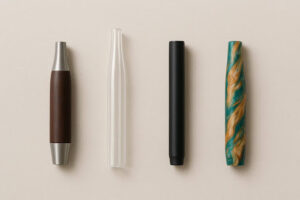
The mouthpiece gives users a simple way to change the appearance of their hookah. Some prefer the smooth industrial look of anodized aluminum. Others like the natural feel of treated wood or the clear appearance of borosilicate glass. The material and finish can match the user’s taste and the style of the rest of the setup.
The choice also affects how the hookah feels in use. A short handle is easy to move around a small desk, while a longer, heavier wand may rest more comfortably on the lap during a relaxed session. The mouthpiece lets each user choose the shape, size, and weight that feels right.
How Does a Mouthpiece Affect Hookah Performance?
Hookah performance is judged by draw smoothness, cloud size, smoke temperature, and flavor clarity. The bowl and heat management device control how much smoke is produced, while the mouthpiece controls how that smoke reaches the user. Small changes to its inner shape or material can change the final feeling of the draw.
Hookah makers pay close attention to the point where flexible silicone connects to a stiff handle. The inner channel should be smooth and fairly straight. This helps reduce extra condensation and unwanted drag as the smoke moves through the mouthpiece.
Mouthpiece Width and Airflow
The inner diameter, also called the bore, controls how much suction is needed to pull smoke through the water. A wide-bore mouthpiece, often measuring ten to twelve millimeters inside, creates an open draw. It requires less effort and can produce large, airy clouds.
A narrow-bore mouthpiece gives a tighter draw with more noticeable resistance. This style is similar to the draw found on older Middle Eastern pipes. It can make the flavor feel more concentrated and supports slower, more controlled breaths. The best width depends on how much resistance the smoker prefers.
Length, Heat, and Smoke Comfort
The length of a mouthpiece can help cool the smoke. As smoke moves through a long metal or glass handle, it has more distance to lose heat before it reaches the lips. Long handles, often thirty to forty centimeters, can provide a calm and cool draw.
Short handles are easier to carry and weigh less, but they place the end of the hose closer to the mouth. If the bowl is very hot, the smoke may feel warmer because there is less handle surface available to release heat.
Connection Size and Air Leaks
A hookah needs an airtight system to work well. If room air enters through a leak, the pressure inside the base falls. This weakens the smoke, reduces flavor strength, and can make the clouds thinner. The point where the hose connects to the mouthpiece is a common place for leaks to appear.
Good mouthpieces have accurately made connector ends that fit tightly inside standard silicone hose without awkward extra grommets. A loose connection can pull outside air into the system with every breath. The session may feel weak even though the user may not immediately realize that the mouthpiece is the cause.
How the Mouthpiece Works With the Hose, Base, and Diffuser
All parts of a waterpipe affect one another. A diffuser at the bottom of the stem breaks large bubbles into smaller ones. This makes the water quieter and can reduce vibration. If the smoother airflow then moves through a high-flow silicone hose and a matching wide-bore mouthpiece, the result can be a quiet, easy inhale.
A mismatch can create problems. For example, a quiet diffuser paired with a very narrow mouthpiece can make the draw feel tight at the end of an otherwise open system. Good performance comes from matching the mouthpiece with the airflow provided by the stem, hose, diffuser, and base. Shops like Shisha Boutique offer diffusers, hoses, and mouthpieces that let you put together a setup where every part works in harmony.
What Types of Hookah Mouthpieces Are Available?
Modern mouthpieces are made from many materials. Each one has its own weight, strength, feel, appearance, and cleaning needs. The best choice depends on whether you value resistance to drops, neutral flavor, light weight, or visual appeal.
Knowing how each material behaves can help you pick a handle that suits your routine, whether you mainly smoke at home, sit at a desk, or take your hookah outdoors.
Metal Mouthpieces
Metal handles are common in modern hookahs. Stainless steel and anodized aluminum are the two main choices. Stainless steel, especially food-grade 304 steel or V2A steel, is very strong, resists rust, and does not add its own flavor. It has a solid weight in the hand and can last for years with regular use.
Anodized aluminum is lighter and is available in many colored finishes. It is easy to hold during a long session and cools fairly quickly. Lower-grade aluminum needs gentle washing, since strong cleaning products can damage the anodized surface over time.
Glass Mouthpieces
Glass mouthpieces are usually made from thick, laboratory-grade borosilicate glass. They offer a clean, elegant appearance and do not add flavor to the smoke. Glass does not absorb old aromas, so strong flavors such as spices or double apple can be removed with a warm-water wash.
Clear glass handles also let users watch the smoke move through the tube before it reaches the mouth. Their main weakness is their fragility. A drop onto tile or a hardwood floor can break the handle, so glass is a poor choice for travel or busy social gatherings.
Wooden Mouthpieces
Wooden mouthpieces bring a traditional, natural look to a modern hookah. Higher-priced models often pair polished hardwood with an inner tube made from stainless steel or brass. This inner tube matters because untreated wood is porous. Without a liner, it can absorb tobacco syrup and moisture, support mold growth, and hold on to old flavors.
With a metal lining, a wooden handle combines the warm feel and natural grain of wood with the cleaner performance of steel. It still needs special care. The outside should not be soaked in water or left wet after cleaning.
Silicone and Plastic Mouthpieces
Silicone, acrylic, and high-density plastic handles are made for simple use, travel, and hard wear. Soft silicone handles are very difficult to break. They bend without pinching and can survive being dropped on concrete without cracking or scratching.
Acrylic and resin handles are available in bright colors and swirling patterns. They are light and resist breaking. Plastic can hold strong flavors if it is not washed well, but its low price and strong construction make it a practical choice for festivals, outdoor sessions, and travel kits.
What Problems Can a Hookah Mouthpiece Cause?
When a hookah does not perform well, users often blame the bowl packing, charcoal, or water level. In many cases, the actual problem is at the end of the hose.
Knowing the common mechanical and heat-related problems can help you find the cause faster and protect the quality of the session.
Loose Connections and Air Leaks
Silicone hose material can lose some of its stretch over time. The connector on a low-cost mouthpiece can also become slippery with moisture and start to move. When the handle and hose no longer form a tight seal, extra air enters the draw.
This extra air makes the smoke thinner, weakens the flavor, and forces the user to inhale harder to produce a normal cloud. Check the connection between the hose and handle from time to time so your breath pulls smoke from the heated bowl instead of drawing in room air.
Restricted Airflow from Residue or Blockages
Smoke cools as it moves through the hose, so moisture naturally collects on the inner walls of the hose and mouthpiece. During repeated sessions, drops of tobacco molasses, small charcoal ash particles, and moisture can combine into a sticky layer inside the channel.
If the mouthpiece is not washed, this buildup makes the inner opening smaller. It can restrict airflow and give later bowls a stale or bitter taste. In serious cases, dried residue may break loose and enter the mouth during a strong draw.
Excess Heat, Condensation, and Discomfort
A mouthpiece with very thin metal walls can absorb heat during fast, repeated draws and become too warm against the lips. Too much moisture inside the channel can also send droplets into the mouth. Hookah users often call this problem “spitback.”
A suitable wall thickness and a well-shaped inner channel can reduce both problems. These features help the smoke reach the mouth without a spray of liquid or uncomfortable heat.
How to Choose a Hookah Mouthpiece
Choosing a mouthpiece means looking at where you smoke, how much weight you like to hold, and how the connector matches your current hookah. No single handle is right for everyone. The best option is the one that fits your normal habits.
Compare the shape and material with your preferred way of smoking. A good match can make each session more comfortable instead of creating another part that gets in the way.
Choose a Comfortable Shape and Weight
Think about where you usually sit. If you smoke at a desk while working or gaming, a light aluminum or slim carbon-fiber wand can reduce pressure on the wrist. It may be easy to hold with two fingers. If you relax in a deep chair, a heavier stainless steel handle may feel more stable in your hand or on your lap.
Look at the shape of the tip as well. A flat tip can rest between the lips with only a small mouth opening. A round, cylindrical tip gives a fuller, traditional feel. The choice comes down to personal comfort.
Check Hose Compatibility and Connector Size
Before buying a replacement handle, measure or check the inner diameter of your hose. Many modern silicone hoses have an inner diameter of ten to eleven millimeters, which matches the connector size used by many current mouthpieces. Proprietary hoses and traditional leather-covered pipes may use different openings.
The connector should have a clear ridge or a gentle taper. A good connector grips the inside of the silicone hose without letting the handle slide out during a draw. It should still come apart without trouble when the parts need to be washed.
Compare Materials, Durability, and Heat Resistance
Think about where the mouthpiece will be used. If you often host friends or smoke outside on a patio or balcony, glass may be a poor choice. Stainless steel, resin, and aluminum are better suited to these settings. A strong metal handle can fall onto concrete and suffer only small marks.
If pure flavor and easy cleaning matter most, and you smoke indoors on carpet or another soft surface, borosilicate glass offers a very clean option. Choose a material that fits your real habits rather than choosing one based only on appearance.
How to Use a Mouthpiece Safely and Hygienically
Responsible hookah use includes good personal and shared hygiene. Warmth, moisture, and natural sugars can create a place where germs grow. Cleaning the mouthpiece helps protect everyone using the hookah.
Simple cleaning habits also help preserve tobacco flavor and stop the setup from becoming a way for illnesses to spread between people.
Use One Disposable Tip per Person
Use a separate hygiene tip whenever you share a hookah. Disposable plastic tips and reusable silicone tips fit over or inside the end of the main mouthpiece. Each person then places their lips on their own tip instead of the shared surface.
Personal silicone tips attached to lanyards are common in hookah lounges and at home gatherings. A guest can wear their tip around the neck and connect it to the shared hose only when it is their turn. This easy step prevents direct contact with saliva from other users.
Clean the Mouthpiece Before and After Use
Washing the mouthpiece should be part of setting up and putting away the hookah. After each session, remove the handle from the silicone hose and run warm tap water through its inner channel. This helps remove fresh condensation and tobacco syrup deposits.
For regular cleaning, add a few drops of mild, unscented dish soap and scrub the inside with a thin nylon tube brush. Do not use strong industrial solvents or rough metal pads. They can scratch the surface and create tiny grooves where bacteria can collect. After washing, place the handle upright on a draining mat so air can move through it until it is fully dry.
What Hookah Hygiene Can and Cannot Prevent
Cleaning the mouthpiece, washing the hose, and using a separate hygiene tip can help limit the spread of oral herpes, common colds, influenza, and some bacterial infections between people sharing a session. These habits make shared hookah use less likely to pass germs from one person to another.
There is also a limit to what cleaning can do. Washing the mouthpiece can reduce the movement of germs between users, but it does not change the chemicals in waterpipe smoke. Water, mouthpiece barriers, and regular cleaning do not remove carbon monoxide, heavy metals, nicotine, or other compounds created by charcoal and heated shisha. A clean mouthpiece lowers the risk of infection from sharing, but smoking a waterpipe still carries health risks that cleaning alone cannot remove.
