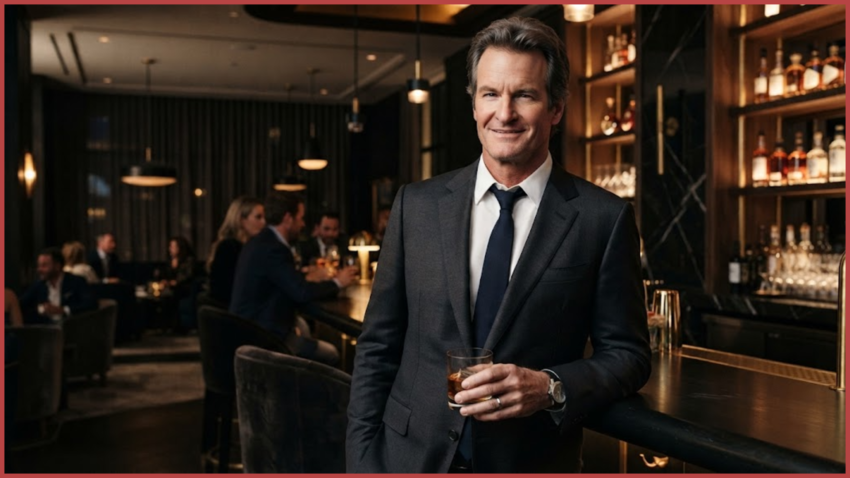
Rande Gerber is a name that frequently appears in conversations about celebrity business, luxury hospitality, nightlife, and premium spirits. While many people first recognize him because of his marriage to supermodel Cindy Crawford or his friendship and business partnership with George Clooney, Rande Gerber built his own professional identity long before becoming a familiar figure in entertainment headlines. His career reflects a combination of hospitality entrepreneurship, branding, lifestyle development, and an understanding of what makes a venue or product memorable.
Born in New York City in 1962, Rande Gerber developed his career across several different industries before becoming widely associated with Casamigos. He entered the entertainment and hospitality world during a period when hotel bars and nightlife were changing dramatically. His work helped create stylish spaces that combined sophisticated design, social energy, and premium service. Later, his partnership with George Clooney and Mike Meldman transformed a personal interest in tequila into a major spirits brand.
Understanding Rande Gerber means looking beyond his celebrity connections. His professional story is also about recognizing consumer behavior, building lifestyle-oriented businesses, developing recognizable brands, and turning personal interests into commercial opportunities.
Who Is Rande Gerber?
Rande Gerber is an American entrepreneur and hospitality businessman best known for his involvement in nightlife, restaurants, lounges, and the creation of Casamigos. He was born on April 27, 1962, in New York City and studied marketing at the University of Arizona. Before establishing himself as a businessman, he also worked as a model, giving him early exposure to fashion, entertainment, presentation, and consumer-oriented industries.
His career eventually moved toward hospitality, where he found an opportunity to combine business strategy with atmosphere and design. Rather than treating a bar simply as a place to purchase drinks, Gerber became known for developing venues that were designed as complete social experiences.
That approach became a major part of his professional identity. His work included bars, lounges, restaurants, and hotel-based entertainment spaces in major cities. Over time, the name Rande Gerber became connected with a particular type of upscale hospitality experience that emphasized design, location, service, and social appeal.
Rande Gerber’s Early Life and Education
Rande Gerber grew up in Hewlett, New York, after being born in New York City. His educational background includes a marketing degree from the University of Arizona. A marketing education proved useful for a career that would eventually depend heavily on branding and understanding customers.
Marketing is particularly important in hospitality because customers are rarely purchasing only a physical product. They are purchasing an experience, an atmosphere, a reputation, and sometimes a sense of belonging. Gerber’s later business career reflected an understanding of these elements.
His early modeling experience also placed him in environments where image and presentation mattered. That background can be viewed as complementary to his later work in hospitality because restaurants, bars, lounges, and spirits brands frequently depend on visual identity and cultural positioning.
Rather than following a conventional corporate career, Gerber moved toward entrepreneurship and entertainment-related business. That decision eventually became the foundation for a much larger professional portfolio.
The Beginning of His Hospitality Career
The hospitality industry became the defining stage of Rande Gerber’s entrepreneurial career. His early work focused on developing bars and nightlife destinations that were different from traditional hotel lounges.
The Gerber Group’s history identifies The Whiskey at the Paramount Hotel as an important early venue, opening in 1991. The business later expanded into numerous bars, lounges, restaurants, and entertainment concepts. The company also developed relationships with major hotel groups, helping integrate distinctive nightlife concepts into hotel properties.
This period was important because hotel bars were evolving. Instead of being treated simply as convenient places for hotel guests to have a drink, some were becoming destinations in their own right. Design, music, lighting, architecture, celebrity culture, and social atmosphere all became part of the customer experience.
Rande Gerber’s approach fit naturally into this changing environment. His venues aimed to create an identity that could attract both travelers and local customers.
The Gerber Group and the Evolution of Nightlife
The Gerber Group became one of the most important parts of Rande Gerber’s professional story. Over the years, its portfolio included concepts such as The Whiskey, Whiskey Blue, Whiskey Park, Stone Rose Lounge, SkyBar, Living Room, and other hospitality destinations. The company’s historical record shows expansion across cities and partnerships with established hotel brands.
The significance of this work was not simply the number of venues opened. The broader idea was that hospitality could become a lifestyle business. A successful location could create a recognizable mood and identity that customers associated with a particular brand.
Gerber’s businesses benefited from the growing connection between hotels, nightlife, entertainment, and luxury travel. The partnership with Starwood Hotels & Resorts was particularly notable because Gerber Group venues became part of the W Hotels environment in different markets.
This helped demonstrate how hospitality brands could collaborate with hotels to create experiences that appealed to a broader audience.
What Made Rande Gerber’s Business Approach Different?
One of the defining features of Rande Gerber’s career has been his focus on experience rather than simply selling a product.
A restaurant can compete through food, but a successful hospitality business can also compete through atmosphere. A bar can offer drinks, but it can become more memorable through interior design, music, location, service, and social energy.
This approach became increasingly valuable as consumers began spending more money on experiences. People often want places that are visually appealing, comfortable, recognizable, and suitable for social occasions.
Gerber’s professional history illustrates how lifestyle branding can turn an ordinary commercial category into something more distinctive. His businesses were not based solely on what customers consumed. They were also based on how customers felt while they were there.
Rande Gerber and George Clooney
Rande Gerber’s friendship with George Clooney is one of the most widely discussed relationships in his business career. The two became longtime friends before eventually becoming business partners.
Their partnership became especially important with the creation of Casamigos. Gerber and Clooney spent considerable time in Mexico and developed an interest in tequila. Instead of immediately approaching the project as a commercial venture, the early concept was connected to their personal preferences and lifestyle. Forbes reported that the brand grew out of their search for tequila they personally enjoyed.
Mike Meldman later joined the venture, creating the three-person founding partnership behind Casamigos.
The story became notable because it represented a different route into the spirits business. Rather than starting with a traditional beverage company and building a celebrity relationship afterward, Casamigos emerged from personal relationships and lifestyle experiences before becoming a commercial brand.
The Story Behind Casamigos
Casamigos is arguably the business achievement most strongly associated with Rande Gerber today. The brand was founded in 2013 by Rande Gerber, George Clooney, and Mike Meldman. Its name is derived from Spanish words associated with a “house of friends,” reflecting the founders’ connection to their homes and friendships in Mexico.
The founders initially focused on developing tequila according to their own tastes. That personal approach became part of the brand story and helped differentiate Casamigos from more traditional spirits marketing.
The brand grew rapidly. In 2017, Diageo announced the acquisition of Casamigos in a transaction valued at up to $1 billion, consisting of an initial payment and potential additional consideration based on performance.
The transaction demonstrated how quickly a lifestyle-driven spirits concept could become a major commercial brand when combined with strong distribution, branding, and consumer demand.
Why Casamigos Became So Popular
The popularity of Casamigos can be understood through several interconnected factors. First, the founders already had significant public visibility. George Clooney brought international recognition, while Rande Gerber brought experience in hospitality and lifestyle businesses.
Second, the brand had a clear personal story. Consumers were not simply being introduced to another tequila. They were being introduced to a product connected to friendship, travel, Mexican living, entertainment, and luxury.
Third, the brand entered the market during a period when premium tequila was gaining broader attention. Consumers increasingly explored tequila beyond traditional shots and basic mixed drinks, creating opportunities for premium and ultra-premium positioning.
The founders also used their own lifestyle as part of the storytelling. Forbes described how the product originated from time spent in Mexico and from the founders’ efforts to create tequila that matched their preferences.
Rande Gerber’s Role in Branding
Branding has always been an important element of Rande Gerber’s career. His hospitality background gave him experience with creating environments that customers could immediately recognize.
That experience translated naturally into the spirits industry. A beverage brand needs more than a product. It needs a personality, visual identity, story, target audience, and emotional connection.
Gerber’s career demonstrates the value of consistency between product and lifestyle. Casamigos was closely associated with relaxed luxury, friendship, travel, and social occasions. These themes were already familiar territory for an entrepreneur who had spent decades working in hospitality.
This connection between physical experiences and product branding helped make his business career particularly distinctive.
Rande Gerber and Cindy Crawford
Rande Gerber is also widely known for his marriage to supermodel Cindy Crawford. The couple married in 1998 and have two children, including model and actress Kaia Gerber. Their family has attracted considerable public attention because of their connections to fashion, entertainment, and business.
However, Gerber’s professional identity developed independently from his marriage. His hospitality career was already established before his relationship with Crawford became a major part of public interest.
The connection between Gerber and Crawford has nevertheless influenced how the public understands his lifestyle brand. Fashion, hospitality, travel, design, and celebrity culture often overlap, and their public appearances have naturally reflected that intersection.
Their relationship also became part of the broader image surrounding Casamigos and their shared lifestyle in Mexico.
Rande Gerber’s Connection to Luxury Lifestyle
Luxury is not limited to expensive products. Modern luxury often involves convenience, design, personalization, exclusivity, and experiences.
Rande Gerber’s businesses have consistently operated within this broader definition. His hospitality venues were designed to create distinctive experiences, while Casamigos was marketed within a premium lifestyle environment.
His professional story therefore provides an interesting example of experiential branding. The objective is not simply to persuade someone to buy something expensive. It is to make the customer associate the brand with a particular type of life.
This strategy is especially relevant in modern marketing, where consumers often respond to stories and experiences as strongly as they respond to traditional product features.
Rande Gerber’s Business Philosophy
Although individual business decisions have changed throughout his career, a recurring theme in Gerber’s work is attention to consumer experience.
His early hospitality ventures required understanding where people wanted to spend their evenings, what kind of atmosphere attracted them, and how design could influence behavior. Later, the same basic principle could be applied to spirits.
The question becomes simple: What does the customer want to experience?
That question can influence everything from packaging to interior design and from advertising to partnerships. Gerber’s career illustrates how a businessperson can move between industries while carrying the same underlying understanding of consumer psychology and lifestyle branding.
Rande Gerber’s Major Professional Strengths
The career of Rande Gerber demonstrates several skills that are useful for entrepreneurs. One is the ability to recognize changing consumer behavior. Another is the ability to build partnerships that complement existing strengths.
His relationship with George Clooney provides an obvious example. Clooney brought global celebrity recognition, while Gerber brought hospitality and business experience. Mike Meldman contributed his own entrepreneurial and real-estate background.
The resulting partnership combined different forms of expertise rather than relying on one person’s abilities alone.
Gerber’s earlier hospitality career also shows the importance of brand consistency. A venue needs an identity that customers can understand quickly, especially in competitive markets.
How Rande Gerber Influenced Hospitality
The influence of Rande Gerber can be viewed through the broader development of hotel nightlife and lifestyle hospitality. The Gerber Group’s historical record shows decades of work across major cities and partnerships with prominent hotels.
The important change was the movement toward treating hospitality spaces as destinations.
A hotel bar could become a meeting point for local professionals. A lounge could become part of a city’s nightlife identity. A restaurant could become associated with a hotel brand and attract customers who were not staying there.
This approach helped create a more integrated relationship between hospitality, entertainment, design, and branding.
The Importance of Networking in Rande Gerber’s Career
Networking has played a significant role in Gerber’s professional journey. Hospitality is an industry built around relationships. Hotel owners, designers, chefs, investors, celebrities, entertainers, marketers, and customers all contribute to a venue’s success.
Gerber’s longtime friendship with George Clooney eventually became a business partnership, demonstrating how personal relationships can sometimes develop into commercial collaborations.
However, successful networking is not simply about knowing famous people. It also requires trust, complementary skills, and the ability to create something valuable together.
That lesson is particularly relevant for modern entrepreneurs.
Rande Gerber and the Rise of Celebrity Entrepreneurship
Rande Gerber’s career also sits at the intersection of traditional entrepreneurship and modern celebrity business.
Today, celebrity-backed brands are common. Actors, athletes, musicians, influencers, and public personalities frequently participate in businesses ranging from beverages to fashion and technology.
Casamigos became an important example of this model because the celebrity association was supported by genuine business involvement and a clear lifestyle narrative.
Gerber’s role demonstrates why celebrity recognition alone is not enough. A recognizable face may generate attention, but long-term commercial success requires product development, distribution, branding, customer demand, and operational execution.
Comparing Rande Gerber’s Hospitality Career With His Spirits Career
There is an interesting similarity between Gerber’s hospitality career and his work with Casamigos.
Hospitality focuses heavily on experience. Spirits branding also depends on experience. In both cases, customers are buying more than a functional item.
When someone visits an upscale lounge, they are purchasing an evening, an atmosphere, and a social experience. When someone chooses a premium spirits brand, the purchase can also be connected to celebration, identity, taste, travel, and social occasions.
This explains why Gerber’s transition from hospitality to spirits was relatively natural from a branding perspective.
Rande Gerber’s Influence on Modern Business Trends
One major business trend associated with Gerber’s career is the growth of lifestyle branding. Consumers increasingly connect products with the stories and communities surrounding them.
Another trend is the use of partnerships between entertainment personalities and experienced entrepreneurs. A successful collaboration can combine audience reach with industry expertise.
A third trend is experiential marketing. Instead of focusing only on traditional advertisements, companies increasingly create environments and moments that allow consumers to experience the brand directly.
Gerber’s career contains elements of all three developments.
What Entrepreneurs Can Learn From Rande Gerber
Rande Gerber’s professional journey offers useful lessons for people interested in entrepreneurship. One is the value of understanding customers before building a business around them.
His hospitality work also demonstrates why differentiation matters. In a crowded market, simply offering the same service as competitors can make growth difficult. Creating a recognizable atmosphere or identity can give customers a reason to remember a company.
Another lesson is the importance of partnerships. Casamigos was built by people with different professional backgrounds who shared a common vision.
Finally, Gerber’s career demonstrates the potential value of turning personal interests into commercial concepts, provided that the underlying product can stand independently in the marketplace.
Why Rande Gerber Remains Relevant
Rande Gerber remains relevant because his career connects several industries that continue to influence modern consumer culture. Hospitality, luxury, celebrity branding, premium beverages, fashion, travel, and social media all overlap in today’s marketplace.
His story is also useful because it demonstrates that entrepreneurship does not necessarily follow a straight path. A person can begin in one industry, develop expertise, build relationships, and later apply those skills to a completely different business category.
The transition from nightlife entrepreneur to spirits entrepreneur is a strong example of transferable business knowledge.
Common Questions About Rande Gerber
Who is Rande Gerber?
Rande Gerber is an American entrepreneur best known for his work in hospitality and as a co-founder of Casamigos. He also has a background in modeling and marketing and has developed numerous hospitality concepts during his career.
When was Rande Gerber born?
Rande Gerber was born on April 27, 1962, in New York City. He later studied marketing at the University of Arizona.
What is Rande Gerber famous for?
He is particularly recognized for his hospitality businesses and for co-founding Casamigos with George Clooney and Mike Meldman. His earlier career included developing bars, lounges, restaurants, and hotel nightlife concepts.
Is Rande Gerber married to Cindy Crawford?
Yes. Rande Gerber and Cindy Crawford married in 1998. Their family has remained connected to the fashion and entertainment industries.
What is Casamigos?
Casamigos is a tequila brand founded in 2013 by Rande Gerber, George Clooney, and Mike Meldman. The brand grew from the founders’ personal interest in tequila and later became a major commercial spirits business.
Did Rande Gerber start his career in business?
Gerber’s career included modeling before he moved into hospitality and entrepreneurship. His later work in nightlife and hospitality became the foundation for his business reputation.
What is Rande Gerber’s connection to George Clooney?
Gerber and Clooney have been longtime friends and later became business partners. Their most famous business collaboration was Casamigos, created with Mike Meldman.
Final Thoughts on Rande Gerber
Rande Gerber’s career is a compelling example of how entrepreneurship can develop across multiple industries. From modeling and marketing to nightlife, hospitality, luxury experiences, and premium spirits, his professional journey has consistently focused on understanding what consumers value.
His work with the Gerber Group helped establish distinctive hospitality concepts, while Casamigos demonstrated how friendship, lifestyle, branding, and business strategy could come together to create a globally recognized product. The 2017 sale of Casamigos to Diageo for a transaction valued at up to $1 billion marked a major milestone in that journey.
What makes Rande Gerber particularly interesting is that his public profile is only one part of his story. His marriage to Cindy Crawford and friendship with George Clooney attract attention, but his business career provides the deeper explanation for why his name has remained relevant in hospitality and lifestyle entrepreneurship.
His story ultimately shows that successful branding is often about more than selling a product. It is about creating an experience people remember, developing relationships that create opportunities, and understanding how consumers connect products with the lifestyles they want to enjoy. That combination has defined much of Rande Gerber’s professional journey and continues to make his career an interesting case study in modern entrepreneurship.
