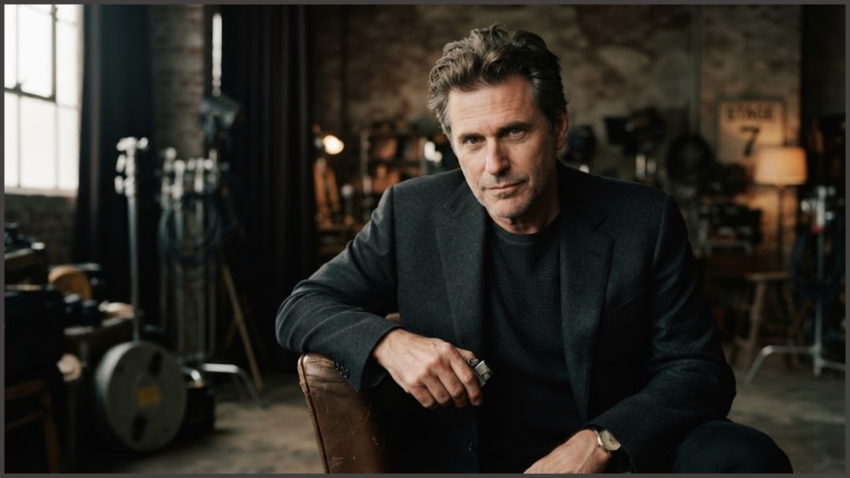
Judd Nelson is an American actor whose name became closely associated with one of the most influential periods in modern Hollywood. Best known for portraying John Bender in The Breakfast Club, Nelson developed a screen presence that was intense, rebellious, emotional, and difficult to ignore. Although his breakthrough came during the celebrated movie era of the 1980s, his career continued across films, television, voice acting, and character-driven projects for decades.
What makes Judd Nelson particularly interesting is that his career cannot be reduced to one famous teenage role. He moved between comedy, drama, crime stories, television series, animated productions, and independent films while gradually developing into a versatile character actor. His performances often carried a distinctive edge, allowing him to portray complicated personalities with a mixture of confidence, vulnerability, sarcasm, and intensity.
Today, audiences continue to discover his work through classic movies, streaming platforms, television reruns, retrospectives, and renewed interest in 1980s cinema. His portrayal of John Bender remains especially powerful because the character represents teenage anger and insecurity in a way that still feels recognizable decades after the movie’s original release.
Who Is Judd Nelson?
Judd Nelson is an American actor born on November 28, 1959, in Portland, Maine. He entered professional acting during the early 1980s and quickly attracted attention for his ability to portray characters who were often complicated, rebellious, emotionally guarded, or unpredictable.
Before becoming a recognizable Hollywood performer, Nelson studied at Haverford College and later moved toward acting. He eventually trained at the Stella Adler Conservatory in New York, an important step in developing his professional acting skills. His early experiences in theater and acting education helped him build the dramatic intensity that later became one of his defining screen characteristics.
Nelson made his film debut in Making the Grade in 1984. The following year changed his career dramatically when he appeared in The Breakfast Club. His performance as John Bender transformed him from a relatively new actor into a recognizable face of a generation.
His career subsequently expanded beyond teen movies. He worked in action films, crime dramas, comedies, television series, made-for-television productions, and animated projects. His credits include St. Elmo’s Fire, New Jack City, From the Hip, Airheads, Suddenly Susan, Empire, and several other productions.
Judd Nelson’s Early Life and Background
Understanding Judd Nelson’s early life helps explain why his path into acting was not necessarily the most obvious career choice from the beginning. He was born into a family with strong professional and civic connections in Maine. His mother, Merle Nelson, was involved in law and public service, while his father, Leonard Nelson, was an attorney.
Nelson attended St. Paul’s School in New Hampshire before continuing his education at Haverford College in Pennsylvania. He initially studied philosophy, but acting gradually became more important to him. His decision to leave college and pursue acting demonstrated a willingness to choose an uncertain creative career rather than follow a conventional professional path.
He moved to New York City and studied at the Stella Adler Conservatory. This training was particularly significant because the Stella Adler approach emphasized emotional truth, imagination, observation, and a serious commitment to character development.
That foundation became visible in Nelson’s performances. Even when playing characters who appeared aggressive or arrogant, he often brought emotional layers underneath the surface. This helped distinguish him from performers who relied only on appearance or attitude.
How Judd Nelson Started His Acting Career
Judd Nelson’s professional acting career began during the early 1980s, when he was part of a generation of young performers trying to establish themselves in a rapidly changing film industry.
His first major film credit was Making the Grade, released in 1984. The comedy gave him an opportunity to demonstrate his ability to play a street-smart and confident character.
He subsequently appeared in Fandango, another early project that helped him gain experience working alongside other emerging performers. These early roles were important because they gave Nelson exposure to different styles of filmmaking before his career-defining breakthrough.
The transition from supporting and early-career roles to major recognition happened very quickly. Within only a few years, Judd Nelson had become one of the recognizable young actors associated with Hollywood’s emerging 1980s generation.
The Breakfast Club and the Rise of Judd Nelson
For many audiences, Judd Nelson will forever be connected with The Breakfast Club. Released in 1985 and directed by John Hughes, the movie brought together five teenagers from very different social backgrounds who were forced to spend a Saturday in detention.
Nelson played John Bender, the rebellious member of the group. Bender was sarcastic, confrontational, defensive, and frequently hostile toward authority. Yet the character was not simply a stereotypical troublemaker.
As the story progresses, viewers discover that Bender’s aggression hides emotional pain and insecurity. Nelson’s performance gave the character a sense of unpredictability that kept audiences interested. His physical mannerisms, facial expressions, voice, and timing all contributed to the character’s identity.
The movie also featured Molly Ringwald, Emilio Estevez, Ally Sheedy, and Anthony Michael Hall. Together, the cast created an ensemble that represented different teenage identities and social expectations.
The lasting popularity of The Breakfast Club helped establish Judd Nelson as one of the defining young actors of the era. The movie’s themes of identity, social pressure, family expectations, stereotypes, and teenage isolation remain relevant, which explains why new generations continue to discover it.
Why John Bender Remains Judd Nelson’s Most Famous Role
John Bender became much more than another movie character. He became a cultural symbol of teenage rebellion.
What makes Bender memorable is the contradiction at the center of his personality. He wants to appear fearless, but he is vulnerable. He insults other people, yet he desperately wants acceptance. He challenges authority while also revealing the damage caused by adults in his life.
Nelson understood that contradiction and avoided making Bender completely one-dimensional. His performance allowed viewers to dislike the character at certain moments while still understanding him later.
This emotional complexity is one reason the role continues to attract attention. Many teen characters from the 1980s now feel dated, but Bender remains recognizable because teenage frustration, insecurity, loneliness, and the desire to be understood are not limited to one generation.
Judd Nelson and St. Elmo’s Fire
Another major 1985 project in Judd Nelson’s career was St. Elmo’s Fire. The movie focused on a group of young adults navigating relationships, ambitions, friendships, and the transition from college life into adulthood.
Nelson portrayed Alec Newbury, a politically ambitious character whose personality was considerably different from John Bender. Alec was more polished, professional, and socially ambitious, showing audiences that Nelson could move beyond the rebellious teenager image.
His work in St. Elmo’s Fire also connected him with several actors who became strongly associated with the so-called Brat Pack era.
Although the term became widely used in discussions of 1980s Hollywood, Nelson’s career demonstrates that the performers labeled as part of that group had different professional paths and identities.
What Was the Brat Pack Era?
The term “Brat Pack” became associated with a group of young actors who appeared in several prominent films during the 1980s. Judd Nelson was frequently connected with this group because of his work in The Breakfast Club and St. Elmo’s Fire.
Other names associated with the era included Emilio Estevez, Rob Lowe, Demi Moore, Ally Sheedy, Andrew McCarthy, Molly Ringwald, and Anthony Michael Hall.
However, Nelson’s relationship with the label has been more complicated than a simple Hollywood nickname. Over the years, the Brat Pack label became almost as famous as some of the movies themselves, sometimes overshadowing the individual careers of the actors.
Nelson’s later work illustrates why judging his career solely through the Brat Pack period would provide an incomplete picture. He continued acting long after the cultural moment that created the label had passed.
Judd Nelson’s Work in The Transformers
One of the more interesting aspects of Judd Nelson’s career is his involvement in animation and voice acting.
In The Transformers: The Movie, Nelson provided the voice for Hot Rod, a character who later became Rodimus Prime. This role demonstrated a different side of his performance ability because voice acting requires an actor to communicate personality primarily through vocal expression.
The Transformers connection also helped Nelson reach an audience that may not have discovered him through his live-action movies.
For many fans of the franchise, his voice became part of the character’s identity. This demonstrates how an actor’s contribution can remain influential even when the audience does not physically see the performer on screen.
Judd Nelson in the Late 1980s
Following his major success, Nelson continued exploring different types of characters rather than repeating John Bender.
He appeared in projects such as Blue City, From the Hip, and Billionaire Boys Club. His performance as Joe Hunt in Billionaire Boys Club was particularly notable because the role allowed him to portray a character inspired by a real-life figure.
Nelson’s career during this period demonstrated both the opportunities and challenges faced by actors who become famous through a defining role at a young age.
Hollywood audiences often expect performers to repeat the qualities that made them famous. Nelson instead moved into different genres, sometimes taking roles that were darker, more mature, or less commercially visible.
Judd Nelson and New Jack City
In 1991, Judd Nelson appeared in New Jack City, a crime film centered on the rise of a powerful drug organization and the law enforcement efforts against it.
Nelson played Nick Peretti, a police officer involved in the investigation. The movie starred Wesley Snipes, Ice-T, Chris Rock, and other performers who became important names in American film and television.
The role represented another shift in Nelson’s career. Instead of playing a rebellious teenager, he was now working within a much darker crime story aimed at an adult audience.
New Jack City became one of his more recognizable projects from the early 1990s and helped reinforce his ability to move between genres.
Judd Nelson’s Television Career
Although his movie work attracted significant attention, television eventually became an important part of Judd Nelson’s career.
One of his most recognizable television roles came in the sitcom Suddenly Susan, where he played Jack Richmond. The series starred Brooke Shields and gave Nelson an opportunity to work within a lighter and more comedic format.
This was a meaningful contrast to the intense personalities he had frequently played in movies. Television comedy requires different timing and performance choices, particularly because actors need to establish character relationships over multiple episodes.
Nelson remained active in television after Suddenly Susan. He appeared in guest and recurring roles on various programs, including crime dramas, comedies, science-fiction shows, and other television productions.
His television appearances helped him remain professionally visible even when he was no longer receiving the same type of major film roles that had defined the first part of his career.
Judd Nelson and Empire
Another notable television appearance came through the musical drama Empire. The series became a major television success and featured an ensemble cast led by Terrence Howard and Taraji P. Henson.
Nelson appeared in a recurring role connected with the entertainment industry portrayed within the show. His participation introduced him to another generation of television viewers who may have known him primarily through his earlier movies.
This is one of the strongest features of Nelson’s career: his ability to appear in different entertainment eras without being completely defined by any single one.
Judd Nelson’s Voice Acting Career
Voice acting represents another important part of Nelson’s professional identity.
His role as Hot Rod and Rodimus Prime in the Transformers universe remains one of his best-known voice performances. He later contributed to Transformers-related animated projects as well.
Voice work can be particularly valuable for established actors because it allows them to create memorable characters without relying on physical appearance.
Nelson’s distinctive voice and ability to communicate intensity made animation a natural extension of his acting style.
His work in voice acting also demonstrates how entertainment careers have become increasingly flexible. An actor can move between cinema, television, animation, streaming productions, and independent projects without remaining tied to one medium.
Judd Nelson’s Acting Style
The acting style associated with Judd Nelson is often described through intensity. He has a distinctive screen presence that can make even a relatively small role feel memorable.
His characters frequently possess some degree of conflict. They may be confident but insecure, aggressive but vulnerable, intelligent but reckless, or successful while emotionally troubled.
This tension became particularly noticeable in his early roles. Instead of presenting characters as completely good or bad, Nelson often gave them rough edges.
That approach can make characters feel more human because real personalities rarely fit neatly into one category.
His performance style also relies heavily on facial expression and vocal delivery. A pause, stare, sarcastic comment, or change in tone can communicate information without requiring lengthy dialogue.
Why Audiences Still Search for Judd Nelson
Search interest in Judd Nelson continues because his work belongs to a period of cinema that remains culturally influential.
People who watched The Breakfast Club during the 1980s often revisit it years later. Younger viewers discover it through streaming services, classic movie collections, social media discussions, and recommendations from family members.
The result is a cycle of renewed interest. Someone may first search for John Bender and then become interested in Judd Nelson’s other movies. Another viewer may discover St. Elmo’s Fire and then explore the careers of its cast members.
This kind of discovery keeps classic actors relevant even when their most famous movies are decades old.
The Lasting Appeal of Judd Nelson’s Movies
The popularity of Judd Nelson’s movies comes partly from the variety of characters he has played.
His filmography includes coming-of-age stories, comedy, crime, drama, action, animation, television movies, and independent productions. This variety means audiences can explore different stages of his career rather than watching the same type of performance repeatedly.
His work also provides an interesting snapshot of changing American entertainment. His early films reflect the culture of the 1980s, while later projects show how actors adapted to television, cable programming, animation, and modern independent filmmaking.
That adaptability is an important part of his professional legacy.
Judd Nelson’s Career Beyond the 1980s
It is easy to remember an actor primarily for their breakthrough decade, but Judd Nelson’s career continued for many years afterward.
He worked in films throughout the 1990s and 2000s and continued making television appearances. His credits include projects such as Airheads, Light It Up, The Black Hole, and various television movies and guest appearances.
He also appeared on programs including CSI, Psych, and Two and a Half Men. These roles allowed him to reach audiences that had grown up long after The Breakfast Club premiered.
His later career demonstrates an important reality about professional acting: longevity does not always mean remaining at the center of blockbuster entertainment. It can also mean consistently finding new roles and continuing to work across different formats.
Judd Nelson’s Recent Career and Continued Recognition
Judd Nelson has remained active in entertainment into the 2020s, appearing in films and television projects while continuing to be recognized for his earlier work.
His recent credits include productions such as The Final Run, along with other independent and television projects. Current film databases also list additional projects connected with his ongoing career.
Interest in his earlier work has also increased as Hollywood has embraced more retrospectives and reunions involving performers from the 1980s.
In 2025, Nelson reunited with some of his Breakfast Club co-stars at a pop culture convention, offering fans another opportunity to celebrate the movie’s lasting cultural impact.
Judd Nelson and the Changing Meaning of Celebrity
Nelson’s career provides an interesting example of how celebrity has changed.
During the 1980s, actors could become cultural icons through a handful of major theatrical releases. Today, audiences discover performers through streaming platforms, social media clips, television libraries, podcasts, fan communities, and online movie databases.
As a result, an actor’s career can experience multiple waves of popularity.
Nelson experienced his first major wave during the 1980s. Another came through nostalgia for classic teen cinema. More recently, younger viewers have encountered his work through digital platforms and discussions about influential movies.
This repeated discovery gives established actors a form of cultural longevity that was less predictable in earlier entertainment eras.
What Makes Judd Nelson Different From Many 1980s Actors?
The biggest difference is perhaps his willingness to embrace characters who were not always conventionally likable.
Many actors who became famous as young stars struggled when audiences stopped seeing them as teenagers. Nelson’s career was different because his intense screen persona could be adapted to older characters.
He could play a rebellious student, a politically ambitious professional, a police officer, a businessman, a criminal, a television executive, or a dramatic supporting character.
That flexibility gave him a longer professional life than simply relying on teenage heartthrob status.
Judd Nelson’s Influence on Pop Culture
Judd Nelson’s greatest contribution to pop culture is arguably the creation of a character who became inseparable from the language of teenage rebellion.
John Bender influenced the way audiences viewed the “bad boy” character. Instead of being simply a villain within a school story, Bender represented a young person struggling with anger and a difficult home environment.
The character’s popularity also contributed to the continuing cultural importance of The Breakfast Club. Even people who have never watched the entire movie often recognize the image and attitude associated with Bender.
Nelson’s performance therefore became larger than the individual film. It became part of the visual and emotional vocabulary of 1980s youth culture.
How to Explore Judd Nelson’s Career Today
For someone discovering Judd Nelson for the first time, starting with The Breakfast Club provides the clearest introduction to his most iconic performance.
After that, St. Elmo’s Fire offers an interesting comparison because Nelson plays a very different personality. Watching New Jack City provides another perspective by placing him in a crime drama, while his work in The Transformers: The Movie demonstrates his voice-acting abilities.
Exploring his later television appearances can then reveal how his performance style changed as he moved into more mature roles.
This approach is more rewarding than focusing only on his most famous character because it reveals the range of his career.
Frequently Asked Questions About Judd Nelson
What is Judd Nelson best known for?
Judd Nelson is best known for playing John Bender in The Breakfast Club. The role became his signature performance and helped establish him as one of the recognizable young actors of 1980s Hollywood.
When was Judd Nelson born?
Judd Nelson was born on November 28, 1959, in Portland, Maine. His professional acting career began in the early 1980s.
What movies made Judd Nelson famous?
His most influential early movies include The Breakfast Club and St. Elmo’s Fire. Other notable projects include New Jack City, From the Hip, The Transformers: The Movie, and Airheads.
Did Judd Nelson play a character in Transformers?
Yes. Nelson provided the voice of Hot Rod, who becomes Rodimus Prime, in The Transformers: The Movie. His work in the franchise is an important part of his voice-acting career.
Was Judd Nelson part of the Brat Pack?
Judd Nelson became strongly associated with the group of young actors popularly labeled the Brat Pack because of his roles in major 1980s movies such as The Breakfast Club and St. Elmo’s Fire. However, the label does not fully represent the range of his later career.
Did Judd Nelson work in television?
Yes. Nelson has had a substantial television career, including his role as Jack Richmond in Suddenly Susan and appearances in programs such as Empire, Psych, CSI, and Two and a Half Men.
Is Judd Nelson still acting?
Yes. Judd Nelson has continued to appear in film and television productions, including projects released in the 2020s. His recent credits demonstrate that his professional career has continued well beyond the period that originally made him famous.
The Enduring Legacy of Judd Nelson
Judd Nelson’s career is ultimately a story about reinvention. He entered Hollywood at a time when a new generation of young actors was becoming culturally important, and he quickly became one of the most recognizable faces of that movement.
Yet his career did not end when the 1980s ended.
Instead, Nelson moved through different genres and formats, accepting roles that allowed him to remain active even when he was no longer the conventional young star at the center of major studio movies. His work in television, animation, crime dramas, independent films, and character roles expanded the definition of his career.
His portrayal of John Bender remains the centerpiece of his legacy, but it should not be mistaken for the entire story. The intensity that made Bender memorable also helped Nelson create a long list of characters with different personalities and motivations.
Conclusion: Why Judd Nelson Still Matters
Judd Nelson remains an important name in American entertainment because his career connects several generations of popular culture. His breakthrough as John Bender in The Breakfast Club gave him an iconic place in movie history, while St. Elmo’s Fire strengthened his connection with the defining young performers of the 1980s.
His later work in New Jack City, Suddenly Susan, The Transformers: The Movie, Empire, and numerous other productions shows that his career was never limited to one teenage character or one decade.
The most interesting thing about Judd Nelson is therefore not simply that he became famous. It is that he continued evolving after becoming famous. He experimented with genres, embraced television, explored voice acting, accepted character roles, and remained connected to audiences who discovered his work years after his original breakthrough.
For longtime fans, he represents an unforgettable era of cinema. For younger audiences, he offers a fascinating introduction to the performances that helped define 1980s Hollywood. And for anyone interested in acting careers, his journey demonstrates how a performer can turn an iconic beginning into a much broader and more enduring professional legacy.