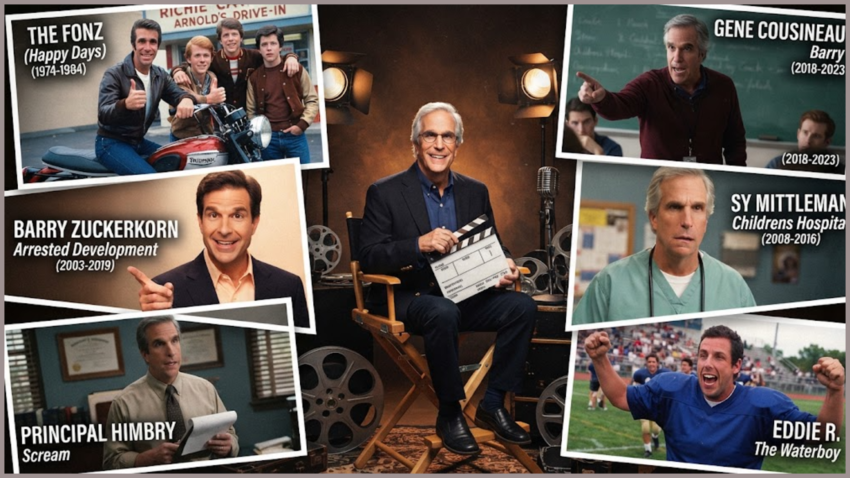
When exploring henry winkler movies and tv shows, it becomes clear that his career is much broader than his unforgettable role as Arthur “Fonzie” Fonzarelli on Happy Days. Winkler has spent decades working across television, film, comedy, drama, voice acting, and family entertainment. His ability to move naturally between different types of characters has helped him remain relevant to several generations of viewers.
From his breakthrough in the 1970s to acclaimed television performances many years later, Winkler has built a career defined by versatility rather than a single character. He has appeared in classic sitcoms, feature films, television dramas, animated productions, and modern streaming series. For viewers discovering his work today, his filmography offers an interesting look at how an actor can successfully evolve throughout a long career.
Who Is Henry Winkler?
Henry Winkler is an American actor, producer, director, and author whose career has stretched across more than five decades. Born in New York City in 1945, Winkler developed an interest in acting at an early age and eventually pursued formal training before entering professional entertainment.
His major breakthrough came when he was cast as Arthur “Fonzie” Fonzarelli on Happy Days. Although the series featured an ensemble cast, Fonzie quickly became one of its most recognizable personalities. Winkler’s performance transformed the character into a cultural icon and established him as one of television’s most memorable performers.
However, looking only at Fonzie does not fully represent his career. The most interesting aspect of henry winkler movies and tv shows is the range of projects that followed. He demonstrated that he could play warm-hearted characters, comedic personalities, serious professionals, eccentric figures, and supporting roles without becoming trapped by his most famous performance.
The Early Career of Henry Winkler
Before becoming internationally famous, Winkler worked steadily to establish himself as an actor. Like many performers, his early career involved smaller television appearances and supporting opportunities that helped him gain professional experience.
His theatrical training played an important role in developing his approach to performance. Rather than relying solely on exaggerated comedy or physical humor, Winkler developed a style that allowed personality and emotion to come through naturally.
His early television work eventually led to the opportunity that changed his career. When he joined Happy Days, audiences immediately responded to Fonzie’s confidence, humor, loyalty, and distinctive personality.
That success became the foundation for one of the most recognizable chapters in television history.
Henry Winkler and Happy Days
Any serious discussion of henry winkler movies and tv shows has to begin with Happy Days. The sitcom premiered in the 1970s and became one of the defining television programs of its era.
Winkler’s Arthur Fonzarelli was initially intended to be a supporting character, but the audience’s response changed everything. Fonzie became increasingly important to the series, and Winkler turned the character into a pop-culture phenomenon.
What made Fonzie memorable was the balance between toughness and vulnerability. He had a cool exterior, but he also demonstrated loyalty and affection toward his friends. Winkler understood that the character needed more than catchphrases and a leather jacket. He gave Fonzie emotional depth.
Why Fonzie Became So Popular
Fonzie represented confidence and independence, but he was also approachable. His relationship with the Cunningham family gave the character a softer side, while his friendships demonstrated his loyalty.
Winkler’s performance helped make Fonzie appealing to both younger viewers and families. The character became associated with the fashion and cultural identity of the era, while the show itself remained a major television success.
The role also earned Winkler significant industry recognition and helped establish his reputation as a leading television performer.
Henry Winkler’s Transition Beyond Fonzie
One of the biggest challenges for actors who become strongly identified with one character is avoiding typecasting. Winkler faced exactly this challenge after Happy Days.
Instead of simply trying to recreate Fonzie, he gradually explored different genres and professional roles. His career expanded into producing, directing, dramatic acting, television guest appearances, and family entertainment.
This transition is an important reason why henry winkler movies and tv shows remain interesting to audiences today. His career is not simply a collection of similar performances. It reflects an actor continually experimenting with different forms of storytelling.
Henry Winkler Movies
Winkler has appeared in a wide range of films, including comedies, dramas, family productions, and supporting roles. His movie career may not be as dominant as his television career, but it contains several noteworthy performances.
One of his early movie appearances was in The Lords of Flatbush, a 1974 film that featured a young Winkler before Happy Days made him famous. The movie provides an interesting opportunity to see him before his signature television role completely defined his public image.
As his popularity increased, Winkler continued appearing in films while maintaining his television career.
The Waterboy
One of Winkler’s most recognizable movie appearances for a later generation came in The Waterboy. In the comedy, he played Coach Klein, a character who combines humor with genuine warmth.
The film allowed Winkler to use his comedic abilities without simply repeating the Fonzie formula. His performance became especially memorable because of the contrast between the character’s personality and the unusual world surrounding him.
For viewers discovering henry winkler movies and tv shows, The Waterboy is an easy entry point into the actor’s later film career.
Click
Winkler also appeared in Click, a comedy-drama featuring Adam Sandler. His role demonstrated his ability to contribute to a mainstream comedy while adding emotional weight to the story.
Although the movie focuses heavily on its central character, Winkler’s presence adds another layer to the film. His performance reflects the more mature phase of his career, when he was increasingly recognized as a respected supporting actor.
Here Comes the Boom
Another example of Winkler’s later movie work is Here Comes the Boom. The film combines comedy, sports, and personal transformation.
Winkler’s ability to function naturally within ensemble casts has been one of the strengths of his later career. Rather than requiring the entire story to revolve around him, he can contribute memorable moments while supporting the central narrative.
Henry Winkler’s Television Career After Happy Days
Television remained an important part of Winkler’s professional life after Happy Days. He appeared in numerous productions and took on roles that demonstrated a much wider acting range.
His later television work is particularly important because it shows how effectively he adapted to changing television styles. The industry moved from traditional network sitcoms toward cable programming, prestige television, streaming services, and shorter-form series.
Winkler adapted alongside those changes.
Arrested Development
One of Winkler’s most beloved later television appearances came in Arrested Development. He played Barry Zuckerkorn, a deliberately unusual attorney whose behavior became a recurring source of comedy.
The role allowed Winkler to embrace eccentric humor while working with an ensemble known for fast-paced jokes and unconventional storytelling.
Barry Zuckerkorn is also a good example of how Winkler avoided being defined exclusively by Fonzie. The character is awkward, strange, and comedic in ways that are completely different from his famous Happy Days persona.
Parks and Recreation
Winkler also appeared in Parks and Recreation, another highly regarded American comedy series.
His appearance demonstrated his ability to fit comfortably into a modern workplace comedy. The series relied on distinctive characters, mockumentary-style humor, and carefully developed relationships.
Winkler’s presence added another familiar face to an ensemble already known for its strong comedic performances.
Royal Pains
Another notable television project in Winkler’s career was Royal Pains. The series combined medical drama with comedy and featured Winkler in a recurring role.
This type of project demonstrates the breadth of his television work. Instead of focusing exclusively on sitcoms, Winkler became increasingly comfortable moving between different tones and formats.
Barry
Among the most important later chapters of henry winkler movies and tv shows is his work on Barry.
Winkler played Gene Cousineau, an acting teacher whose personality, ambition, ego, and emotional complexity became central to the series.
The role earned widespread critical attention and introduced Winkler to another generation of viewers.
Why Gene Cousineau Was Different
Gene Cousineau is not a straightforward hero or comic side character. He is complicated, self-important, vulnerable, sometimes selfish, and occasionally deeply human.
Winkler’s performance works because he allows those contradictions to exist simultaneously. The character can be funny in one scene and emotionally uncomfortable in another.
This role became especially significant because it showed that Winkler was still capable of delivering sophisticated performances many decades after his initial breakthrough.
Better Things
Winkler also appeared in Better Things, a comedy-drama known for its emotionally realistic approach to family relationships and everyday life.
The series represented another shift in modern television storytelling. Instead of depending entirely on traditional sitcom structures, it blended humor with more personal and observational material.
Winkler’s ability to adapt to this style illustrates why his career has remained durable.
Arrested Development and Modern Comedy
Modern comedy has given Winkler opportunities to use a different type of humor from the television comedy of his early career.
In shows such as Arrested Development, comedy often comes from awkwardness, timing, irony, character flaws, and unexpected reactions. Winkler has proven particularly effective in this environment.
His willingness to make his characters ridiculous when necessary has become one of his greatest strengths.
Henry Winkler as a Voice Actor
Another interesting part of henry winkler movies and tv shows is his work in voice acting.
Animated entertainment has allowed Winkler to reach younger audiences while continuing to explore different character types. Voice performances require actors to communicate personality primarily through vocal delivery, timing, and expression.
Winkler’s distinctive voice and comedic timing make him well suited to animated projects.
His voice work also demonstrates the diversity of opportunities available to established actors. A performer does not need to remain limited to live-action television and movies.
Henry Winkler as a Director and Producer
Winkler’s career extends beyond acting. He has also worked as a director and producer, giving him experience from different sides of television and film production.
This broader understanding of entertainment helps explain why he has maintained such a long career. Acting is only one part of the industry, and Winkler has repeatedly demonstrated an interest in storytelling as a whole.
His production work also allowed him to develop professionally at a time when he was already a recognizable television star.
The Importance of Character Acting
One of the most valuable lessons from henry winkler movies and tv shows is the importance of character acting.
A long career does not necessarily depend on always being the lead. Winkler has often made supporting characters memorable by giving them specific personalities and emotional details.
This is particularly visible in his later television work. Characters such as Barry Zuckerkorn and Gene Cousineau are memorable because Winkler gives them individual identities rather than treating them as simple plot devices.
Comparing His Early and Later Roles
Winkler’s early career and later career are dramatically different in tone.
Fonzie was confident, charismatic, and larger than life. Many of his later characters are more flawed and complicated. Some are intentionally awkward, while others reveal emotional vulnerability.
This contrast is one of the strongest reasons to explore his complete filmography rather than watching only his most famous work.
The comparison also reveals how Winkler developed as an actor. His later performances often depend less on conventional leading-man charisma and more on subtle reactions, timing, emotional detail, and character development.
Why Henry Winkler Remains Popular
There are several reasons audiences continue to enjoy Winkler’s work.
First, his career connects multiple generations. Older audiences may remember him primarily from Happy Days, while younger viewers may know him from Barry, Arrested Development, or one of his movie appearances.
Second, he has a recognizable screen presence without depending entirely on one performance style.
Third, Winkler brings warmth to many of his characters. Even when a character is flawed or ridiculous, his performances often contain an underlying humanity.
Finally, his career demonstrates adaptability. Entertainment trends have changed dramatically since the 1970s, yet Winkler has continued finding roles in new formats.
How to Explore Henry Winkler’s Filmography
If you are new to henry winkler movies and tv shows, beginning with Happy Days provides important historical context. It allows viewers to understand why Fonzie became such an influential television character.
After that, exploring his later comedy appearances can provide an interesting contrast. The Waterboy offers a different side of his comedic style, while Arrested Development demonstrates his ability to work within modern ensemble comedy.
For viewers interested in dramatic and more complex performances, Barry is particularly important. Gene Cousineau represents one of the clearest examples of Winkler’s evolution as an actor.
Watching these different projects chronologically can make his career development easier to appreciate.
What Makes His Performances Stand Out?
Winkler is particularly strong at combining comedy with sincerity.
A character can be funny because of something he says, but Winkler often makes the moment even stronger through facial expression, timing, posture, or a subtle reaction.
His performances rarely feel completely disconnected from human behavior. Even exaggerated comedic characters often have recognizable motivations.
That quality has helped him work successfully in both traditional sitcoms and modern television.
Henry Winkler’s Influence on Television
Winkler’s influence is especially significant because Fonzie became one of the defining television characters of the 1970s.
The character helped establish the idea that a supporting role could become central to a show’s identity. Fonzie’s popularity also demonstrated the power of a well-developed television personality.
Decades later, Winkler’s continued success offers another kind of influence. His career demonstrates that actors can reinvent themselves rather than becoming permanently tied to their breakthrough roles.
Trends in Interest in Henry Winkler Movies and TV Shows
Interest in classic television often increases when older shows become available to new audiences through modern entertainment platforms. At the same time, contemporary productions can introduce veteran actors to younger viewers.
This has helped create a situation where people may discover Winkler through a recent series and then explore his earlier work.
Search interest surrounding henry winkler movies and tv shows therefore reflects more than nostalgia. It also represents curiosity about an actor whose career spans several major eras of American entertainment.
Why His Career Is Useful for New Actors to Study
Aspiring actors can learn several important lessons from Winkler’s career.
His experience demonstrates the importance of patience, versatility, and willingness to accept different kinds of roles.
It also shows why an actor should not assume that early success defines an entire career. Winkler could have remained closely associated with Fonzie forever, but instead he continued developing professionally.
His later work proves that reinvention can be more valuable than repeatedly attempting to recreate an earlier success.
Common Questions About Henry Winkler Movies and TV Shows
What is Henry Winkler best known for?
Henry Winkler is best known for playing Arthur “Fonzie” Fonzarelli on Happy Days. The role became one of the most recognizable characters in American television history.
What are some famous Henry Winkler movies?
Among his recognizable movie appearances are The Lords of Flatbush, The Waterboy, Click, and Here Comes the Boom. His film work covers several genres and periods of his career.
What modern TV show made Henry Winkler famous with younger audiences?
His role as Gene Cousineau in Barry introduced his work to many contemporary television viewers. His performances in Arrested Development and other modern series have also contributed to his continued popularity.
Did Henry Winkler only act in comedy?
No. Although comedy has been a major part of his career, Winkler has also worked in dramatic and comedy-drama productions. His later roles often combine humor with more emotionally complex material.
Why is Henry Winkler’s career considered successful?
His career is notable for its longevity, versatility, and ability to adapt. He moved from a defining sitcom role into movies, modern television, voice acting, producing, and directing.
Is Henry Winkler still relevant today?
Yes. His continued appearances in acclaimed television projects demonstrate that his career has remained active across multiple generations of entertainment.
The Lasting Legacy of Henry Winkler
The story behind henry winkler movies and tv shows is ultimately a story about reinvention. Winkler became famous as Fonzie, one of the most recognizable characters of his generation, but he refused to let that role become the limit of his professional identity.
His movies show his comedic versatility, while his television appearances reveal an even broader range. From classic sitcoms to modern prestige comedy, he has repeatedly found ways to remain useful to a new generation of storytellers.
Perhaps the most impressive part of his career is not simply the number of productions in which he has appeared. It is the fact that audiences continue to discover new dimensions of his talent.
Final Thoughts on Henry Winkler Movies and TV Shows
Exploring henry winkler movies and tv shows provides a fascinating overview of an entertainment career that has lasted for decades. His journey from a young actor to the legendary Fonzie, followed by successful work in movies, television comedy, drama, voice acting, producing, and directing, demonstrates remarkable adaptability.
Happy Days remains the foundation of his legacy, but it represents only one chapter. Films such as The Waterboy introduced his humor to new audiences, while appearances in Arrested Development, Parks and Recreation, and other productions demonstrated his ability to thrive in modern ensemble comedy. His acclaimed work in Barry further proved that his talents extend far beyond nostalgia.
For longtime fans, his filmography offers an opportunity to revisit familiar performances. For new viewers, it provides a chance to discover an actor whose career has crossed generations and entertainment formats.
Ultimately, Henry Winkler’s greatest achievement may be his ability to keep evolving. His most famous character made him a television icon, but his willingness to explore unfamiliar roles turned a successful early career into a lasting one. That combination of recognition, versatility, warmth, and professional longevity is what makes his movies and television shows worth exploring today.