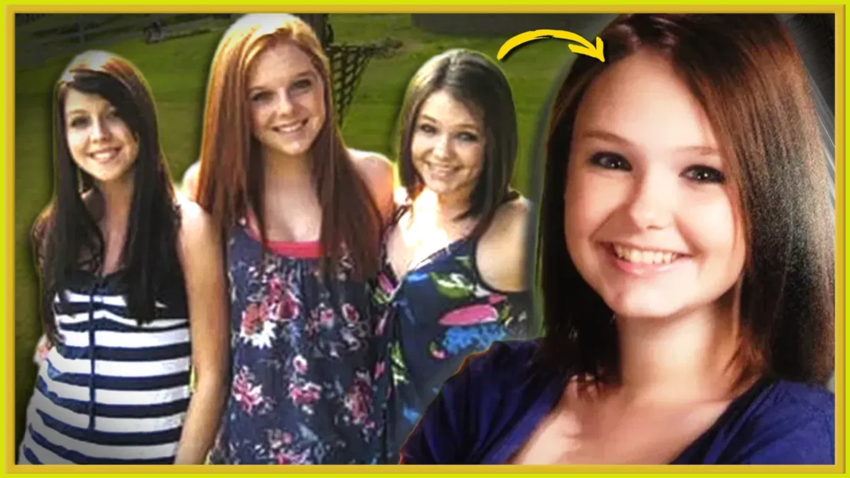
Skylar Neese was a teenager from West Virginia whose disappearance and murder became one of the most heartbreaking criminal cases in the United States. Known as a bright young girl with a close circle of friends, Skylar was only 16 years old when she vanished from her home in July 2012. What initially appeared to be a missing-person case eventually developed into a criminal investigation that revealed a disturbing betrayal involving two people she had considered her closest friends.
The story of Skylar Neese attracted widespread public attention because of the age of the people involved, the circumstances surrounding her disappearance, and the contrast between ordinary teenage friendships and the devastating crime that unfolded. Her case also raised important questions about warning signs, peer relationships, online communication, and the challenges investigators face when a missing teenager’s friends become part of the investigation.
Today, Skylar Neese is remembered not simply because of the circumstances of her death, but because her story highlights the importance of protecting young people, taking missing-person reports seriously, and seeking the truth even when the evidence initially seems confusing. Understanding her life and the investigation requires looking beyond the headlines to consider who she was, what happened during the summer of 2012, and how the case ultimately reached a conclusion.
Who Was Skylar Neese?
Skylar Ann Neese was born on February 10, 1996, and grew up in Star City, West Virginia, near Morgantown. She was the only child of Dave and Mary Neese. Her family described her as an outgoing, intelligent teenager who had a promising future ahead of her.
Skylar attended University High School, where she was recognized for her academic ability. Reports about her life described her as an honors student with an excellent grade-point average. She also held a part-time job at Wendy’s, demonstrating that her everyday life involved the familiar responsibilities of school, work, and friendships.
Like many teenagers, Skylar enjoyed spending time with friends and communicating through social media. She was growing into adulthood, developing her interests, and forming relationships that were important to her. Her family believed she had considerable potential, and she reportedly hoped to pursue a career in law.
These details matter because they help readers understand the person behind the crime story. Skylar was not simply a name in a police investigation. She was a daughter, a student, and a young person with ambitions that were never fulfilled.
Her story also illustrates why discussions of violent crime involving teenagers should remember the victim’s life and personality rather than focusing exclusively on the people responsible for the crime.
Skylar Neese’s Family and Personal Life
Skylar’s relationship with her parents was an important part of her life. Dave and Mary Neese were devastated when their daughter disappeared, and they spent months seeking answers about what had happened to her.
The family lived in a community where the disappearance of a teenager quickly became a major concern. As the days passed without reliable information, the uncertainty became increasingly painful. Her parents did not have the reassurance that she was safe, nor did they initially know the circumstances behind her absence.
The case eventually brought national attention to the Neese family. However, media coverage could never fully communicate the personal loss experienced by parents who had to wait months to learn the truth about their child.
Skylar’s family has also played an important role in keeping her memory alive. Their efforts have contributed to wider discussions about missing children, the handling of endangered-person cases, and the need to take families’ concerns seriously when a young person disappears.
Remembering Skylar through her family relationships offers a more complete understanding of her life. It also emphasizes that the consequences of violent crime extend far beyond the immediate victim, affecting relatives, friends, classmates, and entire communities.
Skylar Neese’s Friendships Before Her Disappearance
One of the most disturbing aspects of the Skylar Neese case was the involvement of two girls she considered close friends: Shelia Eddy and Rachel Shoaf.
Skylar, Eddy, and Shoaf had spent time together during their teenage years. Their friendship appeared familiar and ordinary to people who saw them together. They shared social experiences and maintained connections that seemed consistent with a close teenage social circle.
However, court records later established that the relationships had deteriorated during the months before Skylar’s death. Eddy and Shoaf wanted to end their friendship with Skylar, and the situation developed into something far more serious than a typical disagreement between teenagers.
It is important to distinguish between the general difficulties that can occur in adolescent friendships and the deliberate actions that took place in this case. Friendship conflicts, jealousy, and social exclusion are not unusual during adolescence, but they do not inevitably lead to violence. The murder of Skylar Neese was an extreme criminal act for which the people responsible were held legally accountable.
The contrast between the girls’ outward friendship and the events that followed became a central element of public interest in the case. People struggled to understand how someone could trust friends who were secretly planning to harm her.
That question remains one reason the case continues to be discussed in true-crime reporting and conversations about teenage relationships.
The Night Skylar Neese Disappeared
The events of July 2012
Skylar Neese disappeared during the night of July 5 into July 6, 2012. After finishing her work shift, she left her family’s apartment in Star City without her parents’ permission. Surveillance footage showed her getting into a car that arrived near the residence at approximately 12:30 a.m.
The vehicle was associated with her friends, Shelia Eddy and Rachel Shoaf. Skylar expected to spend time with them, but she never returned home.
When her parents realized that she was missing, they became increasingly worried. The circumstances initially left open several possibilities, including the possibility that she had left voluntarily. Nevertheless, her family continued to seek answers and wanted to know where she was.
At first, the absence of a confirmed explanation made the investigation difficult. There was no immediate discovery of her body, and investigators had to reconstruct her movements using available evidence and information from people who had seen her.
Why the disappearance raised questions
A missing teenager’s case can be difficult to assess in its early stages. Young people sometimes leave home without permission, but that possibility should not automatically be treated as proof that they are safe or that no crime has occurred.
In Skylar’s case, the fact that she had left with people she knew complicated the initial picture. There was no immediate reason for the public to understand that a deadly crime had taken place.
As the investigation progressed, inconsistencies in accounts provided by people connected to the disappearance became increasingly important. Investigators examined surveillance footage, interviews, and other evidence to determine what had happened during the final hours of Skylar’s life.
The case demonstrated the importance of preserving evidence and continuing to investigate when explanations do not fit the known facts.
The Investigation Into Skylar Neese’s Disappearance
The investigation involved local law enforcement, the West Virginia State Police, and the Federal Bureau of Investigation. Investigators worked to establish a timeline, assess witness statements, and identify the circumstances surrounding Skylar’s disappearance.
During the early months, the absence of a clear explanation created enormous uncertainty for her family and the wider community. Missing-person investigations can require extensive work, particularly when a victim’s location is unknown and the available information is incomplete.
In Skylar’s case, investigators examined surveillance recordings and information that helped establish when she had left her home and who had been with her. They also considered inconsistencies in the accounts provided by the two teenagers who had been among the last people known to see her.
The importance of these inconsistencies became clearer as the investigation developed. Investigators were not simply relying on whether someone appeared worried or behaved in a particular way. They were comparing statements with evidence that could be independently checked.
This distinction is important when discussing criminal investigations. A person’s emotional response, public statements, or online behavior cannot independently establish guilt. Reliable conclusions must be grounded in evidence and the legal process.
The investigation ultimately revealed that Skylar had not simply disappeared or run away. She had been murdered, and the people responsible were individuals she had known and trusted.
The Discovery of Skylar Neese’s Body
For more than six months, Skylar’s family had no definitive answer about her whereabouts. The uncertainty ended in January 2013, when human remains were discovered in Wayne Township, Pennsylvania, in a rural area near the West Virginia border.
On March 13, 2013, federal authorities announced that forensic testing had confirmed the remains belonged to Skylar Neese. The identification established that the missing-person investigation was now also a murder case.
The discovery was a devastating development for her parents. Although confirmation ended the uncertainty surrounding her disappearance, it brought the painful reality that their daughter would never return home.
The location of the remains also helped investigators establish the geographical circumstances of the crime. The evidence gathered during the investigation connected the disappearance to events that had taken place outside West Virginia.
The discovery was a turning point because it provided investigators with additional information and strengthened the case for determining what had happened. However, identifying the victim was only one part of the process. Investigators still needed to establish responsibility, understand the sequence of events, and gather evidence that could be presented in court.
What Happened to Skylar Neese?
The investigation revealed that Skylar had been killed by her two friends, Shelia Eddy and Rachel Shoaf, during the night she disappeared.
According to court records, the three teenagers traveled to a remote area near Brave, Pennsylvania. Eddy and Shoaf attacked Skylar with knives, killing her. They subsequently attempted to conceal her body.
The crime was particularly shocking because Skylar had trusted the two girls and had agreed to meet them that night. The circumstances contradicted the ordinary expectations associated with teenage friendship and made the case difficult for many people to comprehend.
Investigators eventually established that the attack had been planned rather than being an unexpected argument that escalated into violence. Both teenagers were prosecuted for their roles in Skylar’s death.
Although the case generated considerable speculation about the reasons behind the murder, it is important to distinguish documented facts from theories about the teenagers’ private lives or motivations. The criminal proceedings established responsibility for the killing, but not every question about the relationships involved can be answered with certainty.
Skylar’s murder remains a reminder that serious violence can occur in circumstances that initially appear ordinary. It also demonstrates why investigators must look beyond initial assumptions when evidence suggests that a missing person’s disappearance may involve a crime.
Shelia Eddy and Rachel Shoaf: The Criminal Proceedings
Rachel Shoaf’s guilty plea
Rachel Shoaf became the first of the two teenagers to publicly face a major legal development in the case. On May 1, 2013, she pleaded guilty to second-degree murder after agreeing to be transferred to adult court.
Her cooperation with investigators helped establish what had happened and contributed to the process of locating Skylar’s remains. Her guilty plea was an important development because it brought a clearer account of the crime into the legal proceedings.
In February 2014, Shoaf was sentenced to 30 years in prison for her role in Skylar’s murder.
Her sentence reflected the seriousness of the crime while also taking account of the legal circumstances surrounding her plea and cooperation. The case prompted considerable public discussion about how juvenile offenders should be treated when they commit exceptionally serious crimes.
Shelia Eddy’s conviction and sentence
Shelia Eddy was also charged in connection with the murder. In September 2013, a grand jury indicted her on murder and kidnapping charges, and she was prosecuted as an adult.
Eddy pleaded guilty to first-degree murder in January 2014. She was sentenced to life imprisonment with the possibility of parole after 15 years.
The distinction between the sentences imposed on Eddy and Shoaf reflected the different charges and legal proceedings involved in their cases. Both were held accountable for participating in Skylar’s killing.
The outcome also showed that being a teenager does not automatically prevent a person from facing adult criminal proceedings. The applicable law, the nature of the offense, and the details of the case all influence how courts handle serious crimes involving young defendants.
The Motive Behind Skylar Neese’s Murder
One of the most frequently asked questions about Skylar Neese is why her friends killed her.
Court records established that Eddy and Shoaf wanted to end their friendship with Skylar and feared that she might reveal sensitive information about them. These details formed part of the documented background to the crime.
Later accounts also explored the possibility that the girls’ personal relationship and concerns about their private lives played a role in their actions. However, explanations offered in interviews, documentaries, and news reports should be evaluated carefully rather than treated as a complete account of every private thought or intention involved.
The central fact remains that the disagreements and relationship tensions did not justify the murder. There is no ordinary friendship conflict that can excuse deliberately taking another person’s life.
It is also important not to generalize from this case to teenage friendships as a whole. Most disagreements between young people do not involve serious violence, and the overwhelming majority of adolescents who experience social conflict do not commit crimes.
A responsible examination of the motive should therefore focus on the established facts, the decisions made by the offenders, and the devastating consequences of those decisions rather than sensationalizing private details.
The Role of Social Media in the Skylar Neese Case
Social media became an important part of the public story surrounding Skylar Neese. Like many teenagers of her generation, she and her friends used online platforms to communicate and share aspects of their lives.
During the search, online posts and public discussions attracted attention. Investigators also considered digital information as part of their broader efforts to reconstruct events and assess statements made by the people involved.
Digital evidence can be particularly useful in modern criminal investigations because messages, timestamps, location information, and account activity may help establish a timeline. However, such evidence must be interpreted carefully and in context.
A social media post does not necessarily reveal everything about a person’s emotional state or intentions. An apparently ordinary message may not reflect what someone is experiencing privately, and online behavior alone cannot prove criminal responsibility.
The Skylar Neese case illustrates both the investigative value and the limitations of digital communication. Technology can help establish facts, but it does not replace witness interviews, forensic evidence, careful analysis, or judicial proceedings.
For families searching for missing loved ones, social media can also help distribute accurate information quickly. At the same time, unverified claims can create confusion, harm innocent people, and interfere with a developing investigation.
Skylar’s Law and Its Wider Impact
Skylar Neese’s disappearance helped bring attention to the way missing and endangered children are reported and investigated in West Virginia.
In 2013, the state enacted legislation commonly known as Skylar’s Law. The law broadened the circumstances in which an Amber Alert could be issued for a missing child, including situations where there was evidence that the child was in danger even if an abduction by a stranger had not been established.
The significance of this change lies in the recognition that a missing child may face serious danger under different circumstances. A response should not depend solely on the assumption that a stranger has abducted the child.
Amber Alerts are emergency notifications intended for qualifying cases involving missing children who meet the applicable legal criteria. They are not automatically issued for every missing-person report. Authorities assess the available facts and apply the relevant requirements.
Skylar’s Law became an important part of her legacy because it connected a personal tragedy to a broader public-safety issue. Although no legislative change could undo what happened to Skylar, improved procedures may help authorities respond more effectively to future cases.
The wider lesson is that missing-person investigations should be handled with urgency, appropriate judgment, and attention to the individual circumstances of each case.
What Skylar Neese’s Case Teaches About Teenage Friendships
The case has often been discussed in relation to friendship, trust, social exclusion, and adolescent behavior. These subjects deserve careful treatment because they affect many young people, even though the vast majority of friendship problems never approach the severity of this crime.
During adolescence, friendships can become closely connected to identity, belonging, and emotional security. Rejection by a trusted friend can be deeply upsetting, particularly when a teenager feels that a relationship is central to their social life.
However, conflict itself is not evidence that someone is dangerous. A more useful approach is to pay attention to concrete behavior, including threats, coercion, intimidation, repeated harassment, or attempts to isolate someone from other sources of support.
Parents and caregivers can help by maintaining open communication with teenagers and creating an environment in which young people feel comfortable discussing difficult relationships without immediately fearing punishment or dismissal.
Schools can also contribute by responding seriously to reports of bullying, harassment, and threats. Supportive counseling, clear reporting procedures, and appropriate intervention can help address problems before they worsen.
At the same time, no single warning sign can reliably predict that a person will commit a violent crime. It is important to avoid simplistic conclusions that encourage suspicion of ordinary teenage behavior.
Skylar’s case is best understood as an extreme act of criminal violence rather than an inevitable consequence of friendship difficulties.
How Families Should Respond When a Teenager Goes Missing
One practical lesson from Skylar Neese’s disappearance is the importance of responding promptly when a young person cannot be located and the circumstances are concerning.
Families should not assume that a teenager is safe simply because the young person may have left voluntarily or was last seen with familiar people. If a child is missing, relatives can contact local law enforcement immediately and explain the circumstances, including any reasons they believe the child may be at risk.
Providing a recent photograph, a description of clothing, details about the last known location, and information about recent communications may help authorities assess the situation. Relevant messages or digital records should be preserved rather than altered or deleted.
Families should also avoid conducting dangerous searches alone or confronting people they suspect may be involved. Investigators are better equipped to assess evidence, coordinate searches, and determine which steps are appropriate.
Online appeals can help spread information, but they should use verified details and avoid publishing unsupported accusations. False claims can harm people who have no connection to the disappearance and distract attention from the search.
Most importantly, families should feel able to communicate their concerns clearly. A missing-person case deserves an assessment based on its specific facts rather than assumptions about why the person might have left.
Skylar Neese in True-Crime Documentaries and Media
Public interest in Skylar Neese’s story has continued long after the criminal proceedings concluded. News reports, television programs, online discussions, and true-crime productions have revisited the case from different perspectives.
In March 2026, Hulu released the three-part docuseries Friends Like These: The Murder of Skylar Neese. The production brought renewed attention to Skylar’s life, the disappearance, the investigation, and the relationships that formed part of the case.
True-crime documentaries can help audiences understand complex investigations by presenting timelines, interviews, and relevant records. They can also encourage discussion about criminal justice, victim advocacy, and public safety.
Nevertheless, viewers should distinguish between established evidence and the interpretations offered by individual commentators. Dramatic storytelling may emphasize particular details, but a documentary should not replace court records or reliable reporting when determining what was legally established.
Ethical true-crime coverage also requires respect for victims and their families. Graphic details and speculation about personal relationships may attract attention, but they are not always necessary to explain a crime or its consequences.
Skylar’s story deserves to be told in a way that recognizes the seriousness of the crime while preserving the dignity of the young person whose life was taken.
The Lasting Legacy of Skylar Neese
Skylar Neese’s legacy extends beyond the investigation and the sentences imposed on the people responsible for her death.
Her case contributed to public discussion about missing children, emergency alerts, and the challenges of responding to situations in which a young person may be at risk. The legislation associated with her name remains one example of how a tragedy can lead to efforts to improve public-safety procedures.
Her family has also worked to preserve her memory and encourage greater awareness of the circumstances surrounding missing and endangered children. Such efforts are important because they keep attention focused on prevention, responsible reporting, and the needs of families facing uncertainty.
Skylar’s life should not be defined exclusively by the violence she experienced. Her academic achievements, family relationships, friendships, and aspirations were all parts of who she was before the crime changed everything.
Remembering those aspects of her life helps restore a sense of individuality to a story that can otherwise become dominated by the details of a criminal investigation.
Her case also encourages readers to consider how communities can respond more effectively when families report concerns, when young people experience threatening behavior, and when investigators encounter inconsistencies in the information they receive.
Frequently Asked Questions About Skylar Neese
Who was Skylar Neese?
Skylar Neese was a 16-year-old student from Star City, West Virginia. She was known as an academically talented teenager who had a part-time job and hoped to pursue a future career. Her disappearance in July 2012 led to an investigation that revealed she had been murdered by two girls she considered friends.
When did Skylar Neese disappear?
Skylar disappeared during the night of July 5 into July 6, 2012, after leaving her family’s home to meet her friends. She never returned.
Who killed Skylar Neese?
Shelia Eddy and Rachel Shoaf were responsible for Skylar’s murder. Both pleaded guilty in adult criminal proceedings and received prison sentences.
When was Skylar Neese found?
Her remains were discovered in Pennsylvania on January 16, 2013. Authorities confirmed her identity through forensic testing in March 2013.
Why did Skylar Neese’s friends kill her?
Court records described deteriorating friendships and concerns about sensitive personal information. Although these circumstances formed part of the documented background, they do not justify the crime.
What happened to Shelia Eddy and Rachel Shoaf?
Eddy pleaded guilty to first-degree murder and was sentenced to life imprisonment with the possibility of parole after 15 years. Shoaf pleaded guilty to second-degree murder and received a 30-year prison sentence.
What is Skylar’s Law?
Skylar’s Law is West Virginia legislation enacted in 2013 that broadened the circumstances under which an Amber Alert could be issued for an endangered missing child.
Why is Skylar Neese’s case still discussed?
The case remains significant because of the betrayal involved, the investigation into her disappearance, the criminal proceedings against her friends, and the changes to missing-child alert procedures associated with her name.
Conclusion
Skylar Neese’s story is a heartbreaking example of how a young life can be cut short by deliberate violence. A promising student with a family who loved her, she disappeared in July 2012 after meeting two friends she trusted. Months of uncertainty followed before investigators established what had happened and brought the people responsible to justice.
The convictions of Shelia Eddy and Rachel Shoaf provided legal accountability, while the investigation and subsequent legislation brought greater attention to the treatment of missing and endangered children. The case also raised lasting questions about trust, friendship, digital evidence, and the responsibility communities have to take concerns about young people’s safety seriously.
Understanding Skylar Neese means looking at the complete story: her life before the crime, the circumstances of her disappearance, the evidence that revealed the truth, and the impact her death had on her family and community.
Her legacy is most meaningful when it goes beyond sensational headlines. By remembering Skylar as a person with ambitions, relationships, and a future that was taken from her, readers can better understand the human consequences of violent crime. Her story remains a reminder of the importance of compassion, responsible investigation, and continued efforts to protect vulnerable young people.
