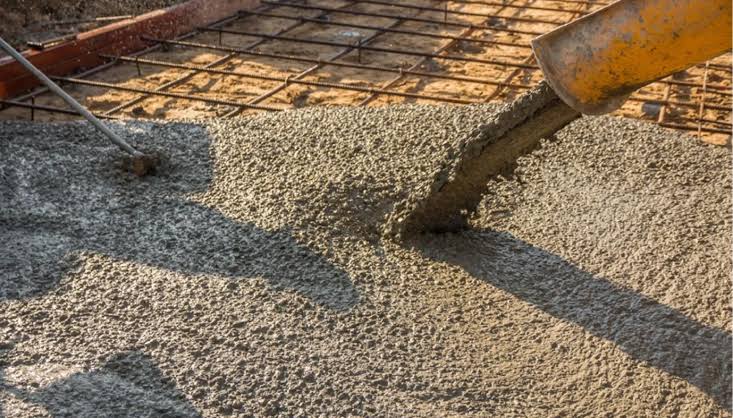
What Are Aggregates and Why Do They Matter
Aggregates are granular materials, typically crushed stone, gravel, sand near me or recycled concrete, used as a base ingredient in construction. They serve two broad purposes. First, they provide bulk and strength when combined with a binder such as cement, forming concrete. Second, they act as a standalone structural layer, compacting down to create a firm, stable surface beneath paving, driveways and roads.
The particle size, shape and composition of an aggregate all influence how it performs. A material that’s ideal for a load-bearing sub-base is often unsuitable for a decorative garden path, and vice versa. Getting this wrong isn’t just a cosmetic issue. Poorly chosen aggregate beneath a driveway can lead to sinking, cracking and drainage failures, while the wrong mix in concrete can compromise its strength and longevity. Understanding the categories below will help you match the material to the job.
Coarse Aggregate: The Backbone of Concrete and Structural Work
Coarse aggregate refers to particles generally larger than 5mm, most commonly ranging from 10mm to 40mm. It forms the bulk of most concrete mixes, sitting between the cement paste and the fine sand to give the finished product its structural strength. Without coarse aggregate, concrete would be little more than a brittle, shrinkage-prone mortar.
Common sources of coarse aggregate include crushed granite, limestone and gravel, each offering slightly different properties in terms of density, hardness and appearance. Granite tends to be favoured for its durability and resistance to weathering, while limestone is often chosen where cost and workability are priorities.
Typical applications for coarse aggregate include:
- Structural concrete for foundations, footings and slabs
- Concrete for driveways, garage bases and outbuildings
- Bedding material for pipes and drainage channels
- Filling voids and creating stable backfill
When selecting coarse aggregate for a concrete mix, the general size to look for is 20mm, though 10mm is sometimes used for finer finishes or where reinforcement spacing is tight. Larger particles, up to 40mm, are more common in mass concrete pours where fine detail isn’t a concern.
Crushed Stone: A Versatile Material for Multiple Uses
Crushed stone is produced by mechanically breaking down larger rocks, typically limestone, granite or basalt, into smaller, angular fragments. Unlike naturally rounded gravel, crushed stone has sharp, irregular edges that lock together well when compacted, making it a popular choice for applications where stability is paramount.
Because it’s produced to a range of graded sizes, crushed stone is remarkably versatile. Smaller grades work well in concrete mixes and pathway surfacing, while larger grades are suited to drainage layers and hardcore fill beneath foundations. Its angular shape also gives it strong interlocking properties, which is why it’s frequently specified for sub-base layers that need to bear significant weight without shifting.
Typical uses for crushed stone include:
- Driveway and pathway sub-bases
- French drains and land drainage systems
- Hardcore fill for building foundations
- Backfilling around pipework and utility trenches
One point worth noting is that crushed stone’s angularity, while excellent for compaction and load-bearing strength, makes it less comfortable underfoot than rounded gravel. For this reason, it’s more commonly used as a structural layer that sits beneath a decorative surface rather than being left exposed.
Ballast: The Go-To Mix for General Concrete Work
Ballast is a pre-blended mix of sharp sand and gravel, usually combining particles up to 10mm or 20mm in size. It’s one of the most widely used aggregates for general domestic and light commercial concrete work because it already contains the right balance of coarse and fine material needed to produce a workable, durable mix once combined with cement and water.
A standard domestic concrete mix ratio using ballast is roughly one part cement to two parts sand to four parts ballast, though this can be adjusted depending on the application. This all-in-one quality makes ballast particularly convenient for smaller projects where sourcing separate sand and coarse aggregate would be unnecessarily time-consuming.
Ballast is commonly used for:
- Mixing concrete for fence posts, shed bases and garden walls
- Footings and shallow foundations
- Bedding for drainage pipes
- General-purpose filling and levelling work
Because ballast contains a mix of particle sizes, it compacts well and resists movement once set, which is why it remains a favourite among both tradespeople and DIY enthusiasts tackling smaller concreting jobs around the home.
Sub-Base Aggregate and MOT Type 1: Building a Stable Foundation
When it comes to preparing the ground beneath driveways, patios, pathways and hard standings, sub-base aggregate is essential. The most widely recognised product in this category is MOT Type 1, a crushed aggregate produced to meet the Department for Transport’s specification for highway works. It consists of particles ranging from 40mm down to fine dust, a blend that allows it to compact into an extremely dense, load-bearing layer.
MOT Type 1 can be manufactured from a range of parent materials, including granite, limestone and recycled crushed concrete, which makes it both a practical and increasingly sustainable choice. Its graded particle range means that, once compacted, it locks together tightly with very few voids, giving it excellent resistance to movement under load and reasonable resistance to frost.
Typical applications for sub-base aggregate include:
- Sub-base layers beneath driveways, car parks and access roads
- Foundation layers under patios, pathways and paved areas
- Bases for sheds, garages and other outbuildings
- General hardcore fill where a stable, compactable surface is needed
For most residential driveway or patio projects, a compacted sub-base depth of around 100mm to 150mm is typical, though heavier trafficked areas may require more. It’s worth compacting the layer in stages using a plate compactor, rather than trying to achieve the full depth in a single pass, as this produces a far more stable and even result.
Decorative Gravel: Combining Function with Kerb Appeal
Not every aggregate is chosen purely for structural performance. Decorative gravel is selected primarily for its appearance, offering a finished surface for driveways, borders and garden paths while still providing practical benefits such as drainage and weed suppression. Popular options include rounded pea shingle, golden gravel and self-binding gravel, each offering a different colour, texture and finish.
Decorative gravel is typically laid over a compacted sub-base, with a geotextile membrane in between to prevent the two layers mixing and to reduce weed growth. This layered approach ensures the surface remains stable and free-draining while still delivering an attractive finish.
Common uses for decorative gravel include:
- Driveway surfacing, often combined with block paving edging
- Garden pathways and border dressing
- Ornamental features around plants and trees
- Low-maintenance alternatives to lawn areas
Smaller, rounded gravels tend to be more comfortable underfoot and are popular for pathways, while slightly larger or angular gravels offer better stability for driveways where vehicles will be parked or driven.
A Simple Guide to Aggregate Sizes and Their Uses
Aggregate sizing can seem confusing at first, but a few general principles make it easier to choose correctly:
- Fine aggregate (dust to 5mm) suits blinding layers, jointing and fine finishing work
- 10mm aggregate works well in concrete mixes requiring a smoother finish and in smaller drainage applications
- 20mm aggregate is the standard choice for general concrete mixes, drainage stone and decorative surfacing
- 40mm and graded sub-base material (such as MOT Type 1) is best suited to structural foundations and heavily trafficked areas
As a general rule, the more structural and load-bearing the application, the larger and more graded the aggregate needs to be. Purely decorative or finishing applications can use smaller, more uniform sizes.
Calculating How Much Aggregate You Need
Ordering the right quantity of aggregate avoids the frustration of running short mid-project or paying to dispose of excess material. The calculation itself is straightforward.
First, measure the area to be covered in square metres by multiplying its length by its width. Next, decide on the required depth in metres (for example, 100mm becomes 0.1m). Multiply the area by the depth to get the volume in cubic metres.
For example, a driveway measuring 10m by 4m with a sub-base depth of 0.15m would require:
10 x 4 x 0.15 = 6 cubic metres of compacted material
Because aggregates compact down once laid and settled, it’s sensible to add an allowance of around 10 to 20 percent to your calculated volume, particularly for sub-base layers that will be compacted with a plate vibrator. It’s also worth remembering that different aggregates have different densities, so the weight per cubic metre can vary depending on the material chosen.
Bulk Bags or Tonne Loads: Choosing the Right Format for Your Job
Once you know how much material you need, the next decision is how to buy it. Aggregates are typically available in three formats: small bags, bulk bags (often around 800kg to a tonne) and loose tonne loads delivered by tipper truck.
For small DIY jobs, such as setting a few fence posts or filling a small planting bed, handy bags or a single bulk bag are usually the most practical option. They’re easy to store, simple to move around a garden using a wheelbarrow, and reduce the risk of ordering far more than you actually need.
For larger projects, such as a full driveway or extensive landscaping work, ordering loose aggregate by the tonne is almost always more cost-effective. Bulk bags carry a premium for packaging and handling, so once a project requires several tonnes of material, a loose tipper delivery tends to work out considerably cheaper per tonne.
A few practical points to consider when choosing between the two:
- Bulk bags are easier to manage on sites with limited access or storage space
- Loose tonne loads are more economical for projects requiring several tonnes
- Trade customers with regular projects often benefit from setting up an account for streamlined, competitively priced bulk deliveries
- Always check vehicle access to your site, as tipper trucks require adequate turning space and a firm surface to unload safely
Whether you’re a tradesperson managing multiple sites or a homeowner planning a single garden project, working with a supplier such as Sansums that offers both bagged and bulk options gives you the flexibility to order exactly what the job requires, without paying for material you’ll never use.
Getting the Foundation Right
Choosing the correct aggregate, whether that’s coarse aggregate for a concrete pour, crushed stone for drainage, ballast for a garden wall footing, or graded sub-base for a driveway, is one of the most important decisions in any construction or landscaping project. Getting the material, size and quantity right from the outset saves time, reduces waste and, most importantly, results in a finished surface that will stand the test of time. Taking a little care at the planning stage, working out volumes accurately and matching the aggregate to its intended use, pays dividends long after the project is complete.
