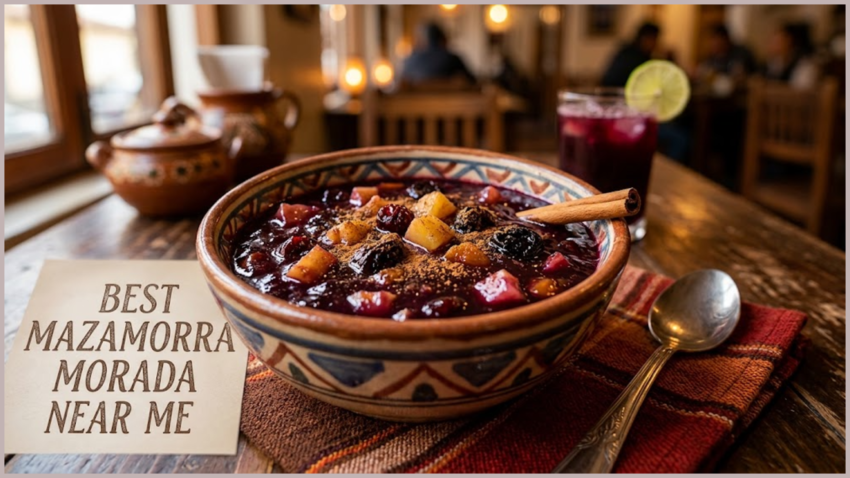
Finding the best mazamorra morada near me can turn an ordinary food search into a memorable culinary experience. This traditional Peruvian dessert is known for its deep purple color, fruity aroma, silky texture, and comforting sweetness. Made primarily from purple corn and a blend of fruits and spices, mazamorra morada is much more than a colorful dessert. It represents an important part of Peruvian food culture and continues to attract people who enjoy traditional Latin American flavors.
Whether you are discovering Peruvian cuisine for the first time or already love classic dishes from Peru, looking for authentic mazamorra morada can introduce you to a dessert with a fascinating history and distinctive character. The best versions balance sweetness with fruitiness while allowing the natural flavor of purple corn, cinnamon, cloves, and dried fruit to remain noticeable.
What Is Mazamorra Morada?
Mazamorra morada is a traditional Peruvian dessert prepared with purple corn, fruit, spices, and a thickening ingredient such as starch. The name is often translated simply as “purple porridge,” although the finished dish is closer to a thick fruit pudding than a breakfast porridge.
Its striking purple appearance comes naturally from purple corn, an ingredient deeply associated with Peruvian cuisine. During cooking, the corn releases its rich color and earthy flavor into the liquid. Fruits such as pineapple, apple, quince, and dried fruits can contribute additional sweetness and complexity, while cinnamon and cloves provide a warm aromatic character.
The final texture is one of the most recognizable features of this dessert. A properly prepared mazamorra morada should be thick enough to hold its shape slightly but soft enough to spoon easily. It should not feel watery, overly gelatinous, or excessively heavy.
Why People Search for the Best Mazamorra Morada Near Me
Searching for the best mazamorra morada near me is often about more than convenience. People usually want to find a version that tastes genuinely traditional rather than an overly modern interpretation that loses the character of the original dessert.
A good serving should have a pleasant balance between sweetness, fruit, spice, and corn. If one flavor dominates too strongly, the dessert can become less enjoyable. Authentic preparation also matters because traditional ingredients create a flavor profile that is difficult to reproduce with artificial colors or generic fruit syrups.
Local Peruvian restaurants, family-owned eateries, bakeries, food markets, and Latin American dessert shops can all offer different interpretations. Some recipes are closely connected to family traditions, meaning two places can prepare mazamorra morada differently while both remaining faithful to Peruvian culinary culture.
The History Behind Mazamorra Morada
The story of mazamorra morada is closely connected to Peru’s long relationship with purple corn. Purple corn has been cultivated in the Andes for centuries and has been used in traditional beverages and foods long before modern restaurants introduced Peruvian cuisine to international audiences.
Over time, indigenous ingredients and culinary traditions interacted with influences introduced during the colonial period. Ingredients such as cinnamon and cloves became part of the flavor profile associated with many Peruvian desserts. This combination helped create the recognizable style of mazamorra morada enjoyed today.
The dessert became particularly associated with Lima and Peruvian urban food culture. It has remained popular because it is relatively simple to prepare while carrying strong cultural associations. For many Peruvians, its flavor can evoke family gatherings, celebrations, childhood memories, and traditional meals.
Its history also demonstrates how food can evolve without losing its identity. Modern cooks may adjust the amount of sugar, fruit, or spices, but the central role of purple corn remains one of the dessert’s defining characteristics.
The Importance of Purple Corn
Purple corn is the foundation of mazamorra morada. Unlike ordinary yellow or white corn, this variety contains naturally occurring pigments that give the cooked liquid its characteristic dark purple tone.
Purple corn also contributes a subtle earthy flavor that works surprisingly well with fruit and warm spices. When simmered properly, the corn produces a flavorful base that can be combined with pineapple, apple, dried plums, raisins, or other ingredients.
The visual appearance is another reason purple corn is so important. A bowl of mazamorra morada immediately stands out because of its naturally intense color. This makes it appealing not only as a dessert but also as a representation of Peru’s distinctive agricultural heritage.
What Makes a Great Mazamorra Morada?
The best mazamorra morada is not necessarily the sweetest one. Flavor balance is much more important than simply adding sugar.
A high-quality version usually has a noticeable fruit character supported by the earthy notes of purple corn. Cinnamon and cloves should add warmth without overwhelming the other ingredients. The texture should be smooth and thick, while small pieces of fruit may provide additional interest.
Freshness also matters. A dessert that has been prepared recently can have a more vibrant aroma and better texture than one that has been sitting for too long. Temperature can vary according to personal preference, but many people enjoy mazamorra morada chilled or slightly cool.
The quality of the ingredients can also make a significant difference. Natural purple corn, fresh fruit, aromatic spices, and careful preparation can create a much more memorable result than artificial flavoring and excessive sweeteners.
How Traditional Mazamorra Morada Is Prepared
Traditional preparation begins with purple corn being simmered in water to extract its color and flavor. Fruit peels, fruit pieces, cinnamon, cloves, and other aromatic ingredients may be added during the cooking process.
The liquid is then strained or adjusted according to the recipe. Sugar is incorporated to achieve the desired sweetness, while a starch mixture is added gradually to thicken the dessert.
Careful stirring is important at this stage. If the thickening ingredient is added too quickly or the mixture is not stirred properly, lumps can develop. Experienced cooks usually pay close attention to heat and consistency because the dessert can thicken considerably as it cools.
The result should have a smooth, spoonable consistency with a glossy appearance and a rich purple color.
Fruit and Spice: The Flavor Combination
One of the most interesting characteristics of mazamorra morada is the way fruit and spices interact.
Pineapple can add tropical acidity and brightness, while apple contributes a softer fruit flavor. Dried fruits can provide concentrated sweetness and a slightly chewy texture. Cinnamon introduces warmth, and cloves contribute a deeper aromatic note.
The combination works because the ingredients provide contrasting characteristics. Purple corn brings earthiness, fruit adds freshness, sugar provides sweetness, and spices create warmth.
This balance is one reason the dessert remains appealing to people who may not normally choose pudding-style desserts.
Where You Might Find Mazamorra Morada
When searching for the best mazamorra morada near me, several types of food businesses may be worth exploring. Traditional Peruvian restaurants are an obvious place to start because they often serve desserts alongside classic dishes.
Peruvian bakeries and family-run food businesses can also be interesting options. Some establishments specialize in homemade-style recipes that reflect regional or family traditions.
Latin American markets and cultural food events may occasionally feature mazamorra morada as well. These settings can be particularly useful for people who want to experience the dessert in a broader cultural context rather than simply ordering it as a restaurant dessert.
Restaurant-Style Versus Homemade Mazamorra Morada
Restaurant-style mazamorra morada often focuses on consistency and presentation. The texture may be carefully controlled so that every serving looks attractive and feels smooth.
Homemade versions can be more personal. Family recipes may contain different fruits, varying spice levels, or slightly different sweetness. Some cooks prefer a thicker dessert, while others make a softer version.
Neither approach has to be considered the only authentic method. Peruvian cooking has regional and family variations, and these differences are part of what makes traditional food interesting.
When searching for the best mazamorra morada near me, paying attention to the style you personally enjoy can be more useful than expecting every authentic recipe to taste identical.
How to Judge the Flavor and Texture
The first thing to notice is the aroma. A well-made serving should have a pleasant mixture of fruit and warm spices rather than a strong artificial smell.
Next, consider the consistency. The dessert should be thick but not rubbery. When you take a spoonful, it should hold together without feeling excessively sticky.
The sweetness should also remain balanced. Sugar should enhance the fruit and spice rather than hide them. If the only noticeable characteristic is sweetness, the preparation may lack complexity.
Finally, consider the aftertaste. A good mazamorra morada leaves behind gentle fruit and spice notes rather than an artificial or overly sugary sensation.
Health and Nutritional Considerations
Mazamorra morada is primarily enjoyed as a dessert, so it is important to view it as part of an overall eating pattern rather than as a health food.
Purple corn naturally contains plant compounds associated with its deep color, including anthocyanin pigments. The exact nutritional profile of a serving depends on the recipe, portion size, sugar content, fruit, and thickening ingredients.
Fruit can contribute some vitamins and naturally occurring compounds, while spices add flavor without requiring large amounts. However, many traditional recipes contain added sugar, so people watching their sugar intake may prefer smaller portions or recipes with reduced sweetness.
The nutritional value of homemade and restaurant versions can vary substantially. Ingredients and preparation methods should therefore be considered when comparing different servings.
Why Mazamorra Morada Remains Popular
Mazamorra morada has survived changing food trends because it offers something many modern desserts lack: a strong cultural identity.
Its color makes it visually memorable, while its combination of fruit and spices gives it a flavor profile that is different from common puddings and custards. It can be served as an everyday dessert or as part of a larger Peruvian meal.
Social media has also helped traditional foods reach new audiences. A naturally purple dessert is visually distinctive, making it attractive to people interested in international food, traditional recipes, and colorful culinary experiences.
For younger diners, trying mazamorra morada can be an accessible introduction to Peruvian cuisine because its sweetness and fruit flavors are familiar even though the ingredient combination is unique.
Tips for Finding Authentic Mazamorra Morada
When looking for the best mazamorra morada near me, pay attention to descriptions that mention traditional Peruvian preparation, purple corn, fruit, and warm spices.
It can also help to look at the restaurant’s wider menu. A business that regularly prepares traditional Peruvian dishes may have a stronger connection to the culinary traditions behind the dessert.
Customer comments can sometimes provide useful clues about flavor and consistency, especially when people specifically mention the dessert rather than only reviewing the restaurant generally.
If possible, asking how the dessert is prepared can also reveal whether it follows a traditional recipe or a heavily modified interpretation.
Common Mistakes in Mazamorra Morada
One common mistake is using too much sugar. Excessive sweetness can cover the natural fruit and corn flavors.
Another problem is an overly thick texture. The dessert should feel soft and smooth rather than stiff. Adding too much starch can turn an otherwise enjoyable preparation into something that feels heavy.
Spices can also become overpowering. Cinnamon and cloves are important, but they should complement the dessert rather than dominate it.
Artificial coloring is another issue when authenticity is the goal. Purple corn naturally creates the distinctive color, so a traditional preparation does not need to rely on artificial purple coloring simply for visual effect.
Mazamorra Morada Compared With Other Peruvian Desserts
Peruvian cuisine includes many famous desserts, and mazamorra morada has a particularly distinctive identity.
Arroz con leche is creamy, milky, and often strongly associated with cinnamon. Mazamorra morada is fruitier, darker in color, and based around purple corn. Suspiro de limeña offers a richer, creamier experience with a completely different texture.
These desserts are not direct substitutes because they provide different flavor experiences. Someone looking for a fruity, aromatic dessert may prefer mazamorra morada, while someone craving a creamy dessert may choose another Peruvian classic.
The variety itself demonstrates the richness of Peru’s dessert tradition.
Modern Trends in Mazamorra Morada
Contemporary chefs sometimes experiment with traditional Peruvian desserts while preserving their recognizable ingredients. Mazamorra morada can appear in modern presentations featuring smaller portions, decorative fruit, layered textures, or creative plating.
Some versions may reduce sugar or emphasize fresh fruit flavors. Others may combine the dessert with complementary Peruvian ingredients to create a more contemporary dining experience.
These changes show how traditional food can adapt to modern preferences. At the same time, the central purple corn foundation remains important for retaining the dessert’s identity.
Why Presentation Matters
Food is experienced through more than taste, and mazamorra morada demonstrates this especially well. Its purple color immediately creates visual interest.
A simple serving can look elegant when presented in a clean glass, ceramic bowl, or traditional dish. A small amount of fruit or a light dusting of spice can provide additional visual contrast.
However, presentation should not replace flavor. A beautifully decorated serving still needs good ingredients and careful preparation to become a memorable dessert.
Making Mazamorra Morada at Home
Preparing mazamorra morada at home can be a rewarding way to understand the dessert. The process allows you to control sweetness, thickness, fruit selection, and spice intensity.
The most important part is building a flavorful purple corn base. Rushing the initial simmering process can result in a weaker flavor and lighter color.
The thickening stage also requires patience. Starch should be incorporated carefully while the mixture is stirred so the final consistency remains smooth.
Home preparation also allows experimentation. Someone who prefers a more fruit-forward dessert can adjust the fruit content, while those who enjoy stronger spice flavors can make subtle changes to the cinnamon or clove profile.
Expert Insight Into Flavor Balance
From a culinary perspective, the strongest versions of traditional desserts often depend on balance rather than complexity. Mazamorra morada is a good example.
The purple corn provides the foundation. Fruit creates acidity and sweetness, spices provide aromatic depth, and sugar connects the flavors. The thickening ingredient determines the final mouthfeel.
If one component becomes too strong, the dessert loses harmony. This is why experienced cooks often adjust the recipe gradually instead of relying on a fixed amount of every ingredient.
The best preparation should taste complete rather than simply intense.
Frequently Asked Questions About Mazamorra Morada
What does mazamorra morada taste like?
Mazamorra morada generally has a sweet, fruity, lightly spiced flavor with subtle earthy notes from purple corn. The exact taste depends on the fruits, spices, sugar, and preparation method used.
Is mazamorra morada served hot or cold?
It can be enjoyed at different temperatures, although many people prefer it chilled or cool. Temperature can affect how the sweetness, aroma, and texture are perceived.
Is purple corn responsible for the color?
Yes. Purple corn provides the characteristic deep purple color of traditional mazamorra morada. Its natural pigments are responsible for much of the dessert’s distinctive appearance.
Is mazamorra morada a Peruvian dessert?
Yes. Mazamorra morada is strongly associated with Peruvian cuisine and is considered one of the country’s traditional desserts.
What fruits are commonly used?
Recipes can vary, but pineapple, apple, quince, raisins, and other dried or fresh fruits may be used. Different families and cooks often have their own preferred combinations.
Is mazamorra morada very sweet?
Traditional versions are usually sweet, but the intensity varies. Restaurants and home cooks may adjust the sugar according to their preferred style.
Can mazamorra morada be made less sweet?
Yes. Reducing added sugar can allow the natural fruit and spice flavors to become more noticeable. The final taste will depend on the sweetness of the fruit and other ingredients.
What should good mazamorra morada look like?
A traditional serving generally has a rich purple color and a smooth, thick consistency. The appearance can vary depending on the recipe and presentation style.
The Cultural Experience Behind the Dessert
Looking for the best mazamorra morada near me is ultimately an opportunity to explore more than a single sweet dish. Food often provides a direct connection to history, family traditions, agriculture, and regional identity.
Purple corn represents an ingredient with deep roots in Peru, while the dessert itself reflects the way different culinary influences developed over generations. Every bowl can therefore tell a small part of a much larger food story.
For people unfamiliar with Peruvian cuisine, trying mazamorra morada alongside other traditional dishes can make the experience even more meaningful.
The Future of Mazamorra Morada
Traditional foods continue to evolve as people move, restaurants open in new countries, and chefs experiment with presentation. Mazamorra morada has the qualities needed to remain relevant because it is distinctive without being difficult to understand.
Its natural color attracts attention, its fruity sweetness appeals to a broad audience, and its cultural background gives it a story beyond the plate.
As interest in regional cuisines grows, more people may encounter purple corn and Peruvian desserts outside their original cultural settings. The challenge for modern adaptations will be maintaining the recognizable character of the dessert while allowing thoughtful innovation.
Final Thoughts on Finding the Best Mazamorra Morada Near Me
Searching for the best mazamorra morada near me is a chance to discover one of Peru’s most recognizable traditional desserts. From its purple-corn foundation and fruity sweetness to its cinnamon and clove aroma, mazamorra morada offers a flavor experience that stands apart from ordinary puddings and modern sweets.
The best preparation is ultimately a matter of balance. Authentic ingredients, thoughtful cooking, a smooth texture, controlled sweetness, and recognizable Peruvian character all contribute to a satisfying serving.
Whether you discover it at a Peruvian restaurant, a family-owned food business, a cultural event, or through homemade cooking, mazamorra morada offers more than color and sweetness. It connects traditional ingredients with generations of culinary history and provides a delicious introduction to the depth of Peruvian cuisine.
For anyone exploring Latin American desserts, this purple Peruvian classic deserves a place on the list of dishes worth experiencing. Its distinctive appearance may be what catches your attention first, but its combination of fruit, spice, and purple corn is what can make the experience memorable.
